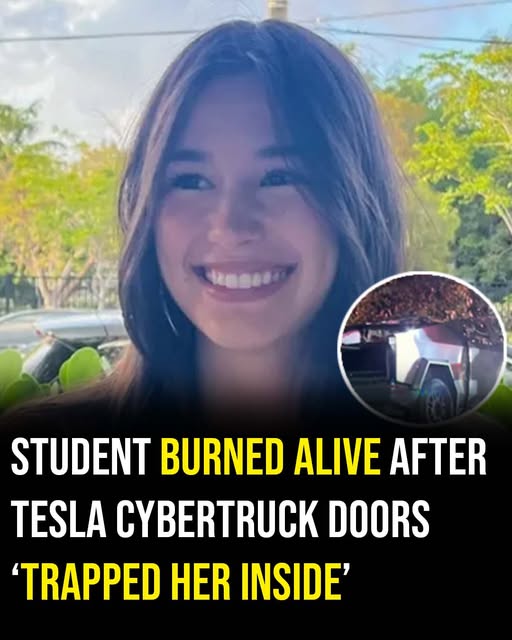
A tragic accident in California has raised serious questions about electric vehicle safety after a college student lost her life when she became trapped inside a burning Tesla Cybertruck.
On November 27, 2024, 19-year-old Krysta Tsukahara was traveling with three friends in a Tesla Cybertruck when the vehicle crashed into a retaining wall and caught fire. Emergency responders arrived to find the vehicle fully engulfed in flames, according to a statement from local authorities.
The crash resulted in multiple fatalities. Tsukahara, along with driver Soren Dixon, 19, and passenger Jack Nelson, 20, were unable to escape the vehicle as the fire spread rapidly.
All three had recently graduated from Piedmont High School and were back in town for the Thanksgiving holiday.
One passenger, Jordan Miller, survived after being rescued by a friend who had been driving behind them. The rescuer reportedly broke a window after repeated attempts and pulled Miller—who was barely conscious—from the vehicle moments before it was overtaken by flames.
Investigation and Contributing Factors
Authorities later reported that the driver had substances including alcohol and drugs in his system at the time of the crash. Investigators determined that impaired driving and speed were contributing factors.
However, the victims’ families argue that vehicle design also played a critical role in the outcome.
Allegations of Safety Failures
According to a wrongful death lawsuit filed by Tsukahara’s family, she survived the initial impact but was unable to exit the vehicle due to an apparent failure in the electronic door system.
The lawsuit claims that the Cybertruck’s doors, which rely on electrical power, became inoperable after the crash. Although a manual release mechanism exists, it is described in the filing as difficult to locate and operate during an emergency situation.
The complaint states that attempts were made to rescue Tsukahara through the passenger-side window, but the effort was unsuccessful due to intense heat and fire conditions.
Medical reports indicate that she died from smoke inhalation and thermal injuries.
Legal Action and Consumer Safety Concerns
Families of the victims have filed lawsuits against Tesla, alleging product liability and raising concerns about automotive safety design in electric vehicles. The claims argue that the company was aware of potential risks related to electronic door systems but failed to implement safer alternatives.
The lawsuits seek damages and call for increased accountability, emphasizing the importance of accessible emergency exits in high-risk situations such as vehicle fires.
An attorney representing one of the families described the incident as preventable, stating that improved safety features and more intuitive emergency systems could have made a difference.
Broader Debate Around Electric Vehicle Design
The case has added to ongoing discussions about electric vehicle safety standards, particularly regarding battery-related fires and electronic system reliability after collisions.
Since its release in late 2023, the Tesla Cybertruck has attracted significant attention for its futuristic design and advanced technology. However, it has also faced scrutiny over recalls, safety concerns, and regulatory challenges.
As legal proceedings continue, the incident is likely to remain part of a larger conversation about consumer protection, vehicle engineering, and the responsibilities of automakers in ensuring passenger safety.