A major milestone in space exploration during the Artemis II mission became a deeply personal moment for the crew, blending scientific achievement with a heartfelt tribute.
As the astronauts traveled farther from Earth than any humans before—surpassing the record set by Apollo 13—they marked the occasion by proposing names for two previously unnamed lunar craters.
A Historic Moment Turns Meaningful
At a distance of approximately 248,655 miles from Earth, the crew identified two visible craters on the Moon and shared their naming proposal with Mission Control in Houston.
Jeremy Hansen, serving as mission specialist, explained that the team had carefully observed these features both with the naked eye and through camera equipment before suggesting names.
The first proposed name, “Integrity,” was chosen to reflect the Orion spacecraft and the mission’s broader goals in aerospace innovation and human spaceflight.
A Personal Tribute From Space
The second proposed name carried a much deeper emotional significance.
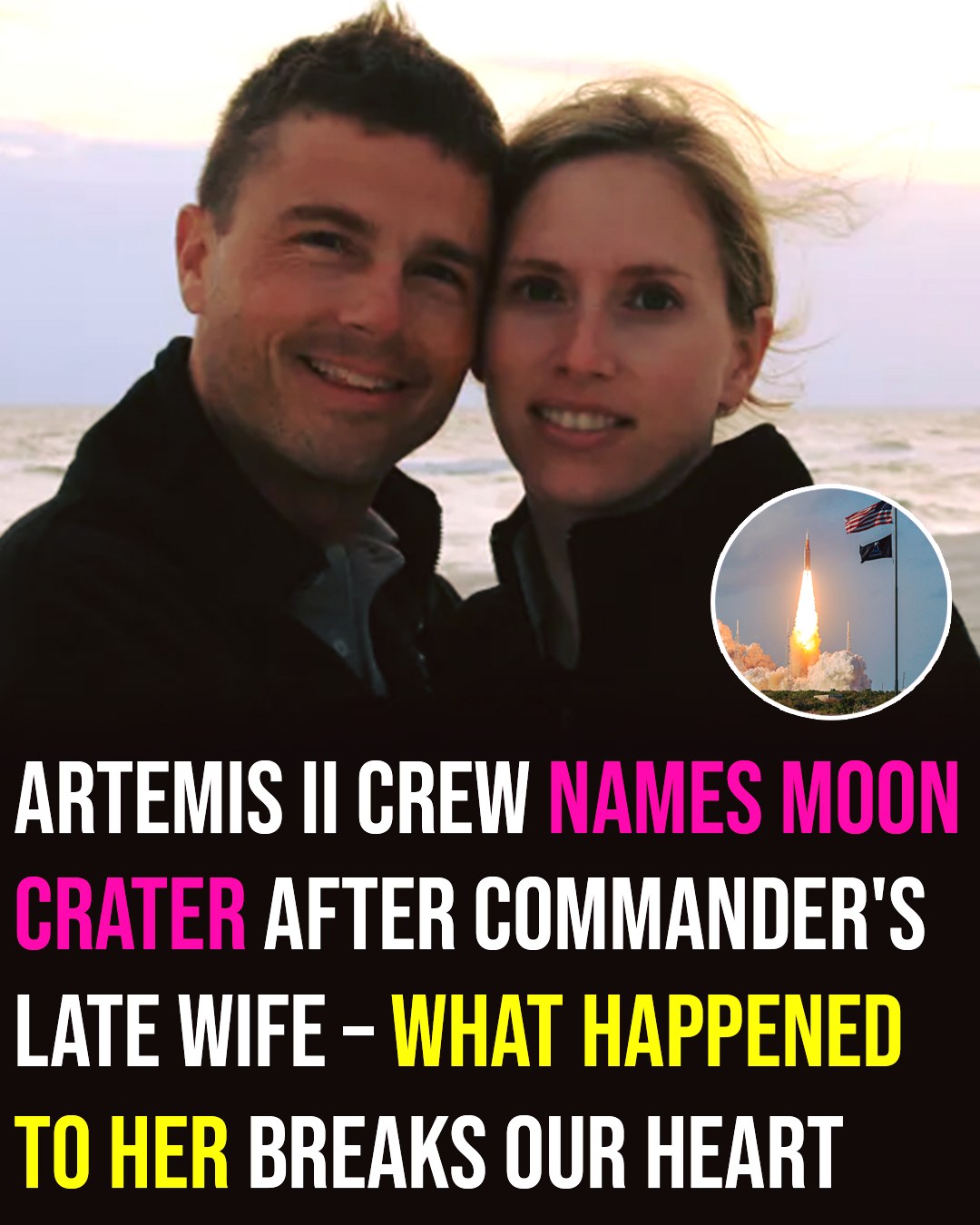
Hansen explained that the crew wanted to honor someone close to mission commander Reid Wiseman. The suggested name, “Carroll,” is a tribute to Wiseman’s late wife.
The crater itself is described as a bright feature on the Moon, visible from Earth at certain points in its orbit—making it a fitting symbol of remembrance.
After the proposal, Mission Control briefly paused before acknowledging the request, confirming both names had been received.
Who Was Carroll Wiseman?
Carroll Wiseman passed away in 2020 after a five-year battle with cancer. She is survived by her husband and their two daughters.
During her illness, Reid Wiseman stepped away from active flight duties and took on leadership roles within NASA’s astronaut office. He later returned to flight status in 2022 and was subsequently selected for the Artemis II mission.
Before launch, Wiseman shared a message expressing pride in his daughters, highlighting the personal sacrifices often involved in space missions and high-risk careers.
He has also spoken openly about preparing his family for the realities of space travel, including its risks—an aspect that underscores the human side of scientific advancement.
A Life Dedicated to Helping Others
According to her obituary, Carroll Wiseman built a career centered on care and compassion. She worked as a nurse and later specialized as a pediatric nurse practitioner.
She held degrees from several institutions and contributed to healthcare in multiple communities, including work at children’s hospitals and schools. Her professional life focused on supporting families and improving the well-being of young patients.
NASA has also recognized her contributions, noting her dedication as a neonatal intensive care unit nurse and her lasting impact beyond the space program.
What Happens Next?
The proposed crater names are not yet official. They must be reviewed and approved by the International Astronomical Union, the global body responsible for naming celestial features. This process can take time, as similar proposals often require careful evaluation.
Final Takeaway
The moment highlights a powerful intersection of science, human achievement, and personal legacy. While Artemis II represents a major step forward in space technology and exploration, it also serves as a reminder of the personal stories behind these missions.
By honoring Carroll Wiseman, the crew transformed a historic milestone into a lasting tribute—one that connects innovation with memory and humanity.