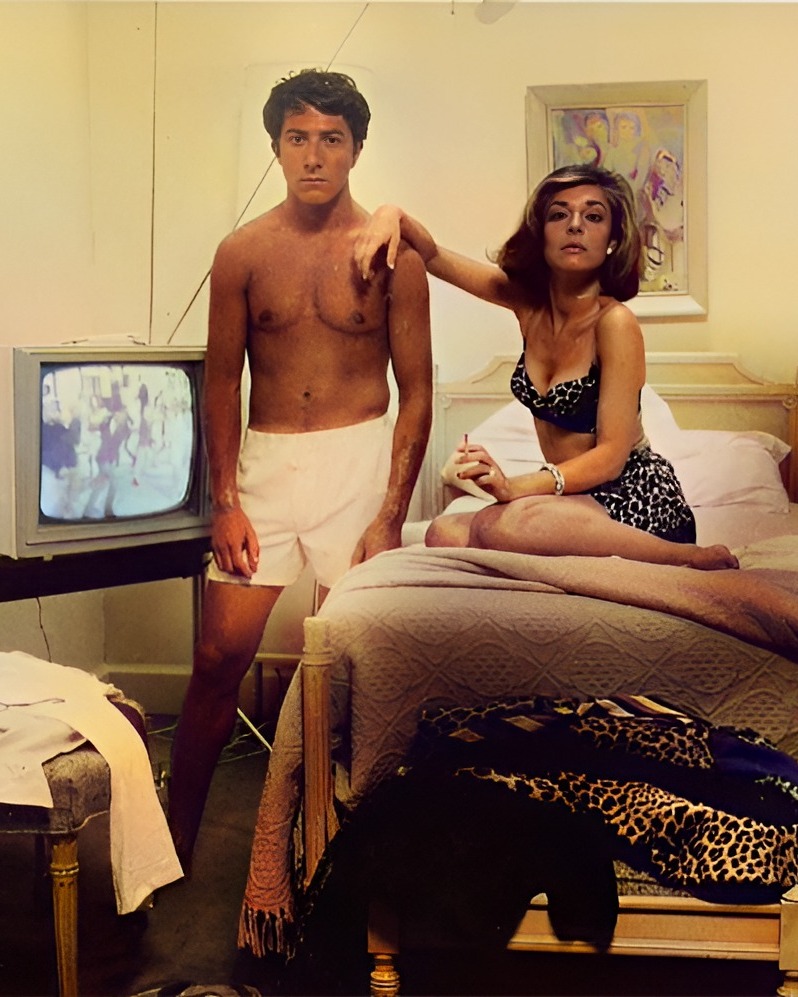
Long before modern pop culture slang entered everyday language, the 1967 classic The Graduate had already become a cultural phenomenon that reshaped American cinema. With standout performances from Dustin Hoffman and Anne Bancroft, the film captured themes of youth, rebellion, and social change at a defining moment in history.
Even decades later, the film remains widely studied and celebrated—but behind its polished final cut lies a collection of fascinating production stories, casting decisions, and subtle on-set mistakes that continue to intrigue audiences.
A Film That Captured a Changing America
Released in 1967 during a period of major cultural transformation in the United States, The Graduate reflected shifting attitudes toward relationships, authority, and identity. The film arrived at a time of political protests, the rise of counterculture, and growing generational tension.
Its success helped establish it as one of the most influential films of its era, blending satire, romance, and social commentary in a way that felt fresh and unconventional.
Dustin Hoffman’s Unexpected Casting Story
Before becoming a breakout star, Dustin Hoffman was far from a Hollywood favorite for the role of Benjamin Braddock. During early casting, producer Joseph E. Levine reportedly mistook Hoffman for a crew worker rather than an actor when he arrived for an audition.
Hoffman, recognizing the misunderstanding, briefly played along before revealing his identity. That moment ultimately helped launch one of the most defining performances of his career.
Why Robert Redford Wasn’t Cast
Actor Robert Redford was also considered for the lead role and even completed screen tests. However, director Mike Nichols ultimately felt Redford’s natural confidence made him less suitable for the socially awkward character of Benjamin Braddock.
According to widely shared casting accounts, Nichols questioned whether someone with Redford’s presence could convincingly portray a character struggling with insecurity and romantic hesitation.
Awkward Screen Tests and Early Doubts
Hoffman’s casting was not an obvious choice at the time. Both he and co-star Katharine Ross reportedly had doubts about their on-screen compatibility during early rehearsals, citing differences in appearance and experience.
Despite initial uncertainty, director Mike Nichols proceeded with the casting, a decision that would later earn him critical acclaim and an Academy Award for Best Director.
Financial Reality Behind the Success
Although The Graduate became one of the highest-grossing films of 1967, earning over $100 million globally, Dustin Hoffman’s initial salary was modest by Hollywood standards.
After taxes and early living expenses in New York, Hoffman later shared that he had very little money left and even applied for unemployment assistance while continuing to pursue acting opportunities.
Casting Choices and Iconic Roles
The role of Mrs. Robinson was originally considered for several well-known actresses, including Doris Day, who declined due to the film’s mature content.
Ultimately, Anne Bancroft delivered a performance that became one of the most iconic portrayals in film history, redefining how complex female characters were depicted in mainstream cinema.
Behind-the-Scenes Improvisation
One of the film’s most talked-about production moments came during the hotel room scenes, where improvisation played a key role. Director Mike Nichols was known for encouraging spontaneity, which sometimes led to unexpected reactions that were kept in the final cut.
These unscripted moments contributed to the film’s natural, awkward tone—something that became part of its lasting appeal.
Age Differences and On-Screen Illusion
Although Bancroft’s character is often portrayed as significantly older than Benjamin, the real age difference between the actors was relatively small. Hollywood styling, lighting, and performance choices helped create the illusion that became central to the story’s dynamic.
Music That Defined a Generation
The film’s soundtrack, featuring Simon & Garfunkel, played a major role in its success. Songs like The Sound of Silence and Mrs. Robinson were integrated into the editing process, creating a distinctive emotional rhythm.
The music became so closely associated with the film that it helped elevate both the movie and the artists to new levels of global recognition.
Filming Techniques That Shaped the Story
Director Mike Nichols used innovative camera work to reinforce Benjamin’s emotional state. In several scenes, lens choices and directional movement were designed to visually emphasize feelings of confusion, stagnation, and isolation.
These subtle techniques contributed to the film’s reputation as a milestone in modern visual storytelling.
On-Set Challenges and Production Workarounds
Like many productions of its time, The Graduate required creative solutions during filming. Certain scenes involving body doubles and stand-ins were carefully arranged to meet performance requirements while maintaining continuity and artistic intent.
Small Filming Errors Fans Still Notice
Even classic films contain minor continuity issues, and The Graduate is no exception. Among the most frequently mentioned are:
- A lipstick mark that disappears between scenes
- Lighting inconsistencies that shift between night and day
- Background audio that changes unexpectedly between cuts
These small imperfections have become part of the film’s long-standing discussion among fans and film analysts.
Cultural Legacy and Lasting Influence
Over time, The Graduate has been referenced and parodied across television and film, including appearances in shows such as The Simpsons and other popular productions.
Its influence continues to shape modern storytelling, particularly in how films portray young adulthood, relationships, and personal uncertainty.
Why The Graduate Still Matters Today
More than half a century after its release, The Graduate remains a defining piece of American cinema. Its combination of strong performances, innovative direction, and unforgettable music ensures its continued relevance.
From its unconventional casting stories to its subtle filmmaking techniques, the movie stands as a reminder that cinematic classics are often built on both perfection—and imperfection.