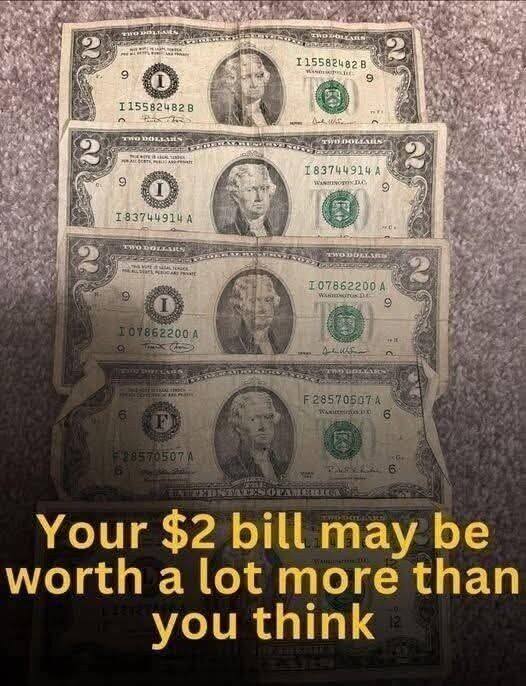
The American $2 bill occupies a singular and somewhat surreal position in the landscape of United States currency. While most denominations are viewed purely as a utilitarian medium of exchange, the $2 bill exists in a fascinating intersection of everyday tender, urban legend, and high-stakes numismatic value.
For decades, various myths have suggested that the bill was “cursed,” brought misfortune to its holder, or was simply a relic of a bygone era that was no longer in production. In reality, the $2 bill has never been discontinued or outlawed; its perceived rarity is largely a byproduct of public habit and the logistical preferences of retail environments.
The decline of the $2 bill in common circulation was not triggered by a federal mandate, but rather by a slow drift into the realm of novelty. Because most cash registers were not built with a dedicated slot for the denomination, merchants often found them cumbersome to store in drawers.
Continue reading next page…