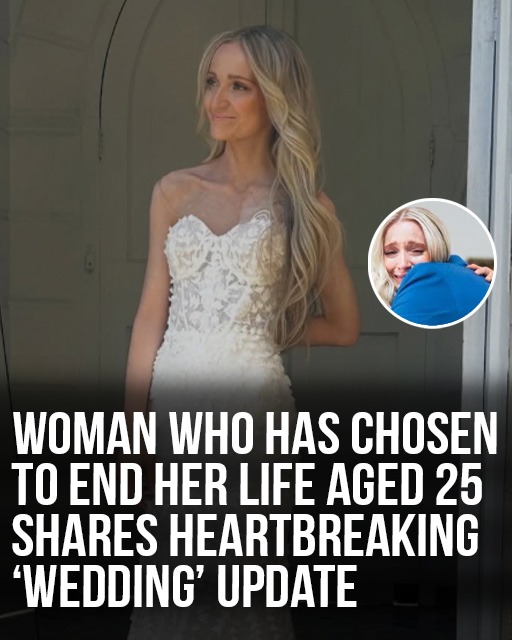
A 25-year-old woman living with a severe autoimmune disorder recently created a powerful and emotional memory with her family — a private “wedding day” experience she described as her chance to feel like herself again.
Annie Holland has been battling a rare condition called Autoimmune Autonomic Ganglionopathy (AAG), a serious disorder in which the immune system attacks the autonomic nervous system. The illness affects critical bodily functions such as heart rate, blood pressure, digestion, and breathing.
While AAG is not always fatal, Annie’s diagnosis came after significant progression of the disease. Over time, complications have become increasingly severe.
Living With a Rare and Life-Threatening Condition
According to reports, Annie faces ongoing medical risks, including vulnerability to infection, potential sepsis, feeding tube complications, and progressive bone deterioration affecting her jaw. In recent months, she has required repeated hospitalizations due to persistent infections.
She is also preparing for major surgery involving full dental extraction and a bone graft procedure after deterioration of her jaw structure — a complication linked to her underlying condition.
Chronic illness at a young age has forced Annie to confront realities most people do not face until much later in life. She has spoken openly about the emotional toll of living with a degenerative autoimmune disease and the impact it has had on her independence, identity, and future plans.
Approved for Voluntary Assisted Dying
In November, Annie publicly shared that she had been approved for voluntary assisted dying (VAD) under her region’s legal framework. While she continues to pursue medical care and fight infections, she has explained that her decision was driven by a desire to avoid prolonged suffering if her condition worsens beyond recovery.
Her announcement sparked conversations online about end-of-life care, patient autonomy, and the realities of rare disease management.
Rather than focusing solely on medical decline, Annie has chosen to dedicate her remaining energy to meaningful experiences with loved ones.
Creating a “Bucket List” of Memories
To help shape her remaining time around joy and connection, Annie created what she affectionately calls her “F-it List” — a personal bucket list of experiences she wants to complete.
One of the most significant items on that list was trying on a wedding dress and experiencing a symbolic “wedding day.”
Although she previously told friends she didn’t envision marriage in her future, she later acknowledged that watching peers celebrate milestones such as weddings and starting families brought a quiet sense of grief.
A private bridal fitting was arranged at Adelaide Bridal Collective, giving Annie the opportunity to wear a gown and share the experience with her family.
A Day Focused on Family and Celebration
During preparations, Annie required pain medication injections just to manage symptoms and continue with the event. Despite her physical challenges, she described the day as transformative.
She explained that trying on a wedding dress felt like a rite of passage — not only for herself, but for her family.
Parents often dream of watching their children reach milestones like 18th birthdays, graduations, weddings, and starting families. Annie recognized that her illness has altered that trajectory, and she wanted to offer her loved ones a joyful memory to hold onto.
She spoke particularly about how meaningful the moment was for her father. Traditionally, walking a daughter down the aisle is one of the most cherished experiences for a parent. Giving him that moment, even symbolically, carried deep emotional significance.
“I Felt Like Myself Again”
Perhaps the most powerful aspect of the day was how it helped Annie reconnect with her sense of identity beyond illness.
Chronic disease often reshapes how individuals see themselves. Hospital visits, medications, and medical equipment can overshadow personality and dreams.
Annie shared that during her bridal moment, she felt like “the old Annie” — not defined by diagnoses or medical limitations.
For a few hours, she felt like a typical 25-year-old celebrating a milestone. She described the experience as more than simply trying on a dress; it was about reclaiming parts of herself that illness had taken away.
Raising Awareness About Rare Autoimmune Disease
Annie’s story has drawn attention to the challenges of living with rare autoimmune disorders, as well as broader conversations around palliative care, patient rights, and mental health support for those facing life-limiting conditions.
Autoimmune Autonomic Ganglionopathy remains little known outside medical communities, yet its impact on patients can be profound. Increased awareness may help others seek earlier diagnosis and specialized treatment.
While Annie continues navigating complex medical decisions, she has chosen to center her story on love, family, and meaningful experiences.
Her “wedding day” was not about tradition or ceremony — it was about memory, connection, and leaving behind something beautiful.
For Annie, the moment represented something simple but powerful:
For one day, she felt like herself again.