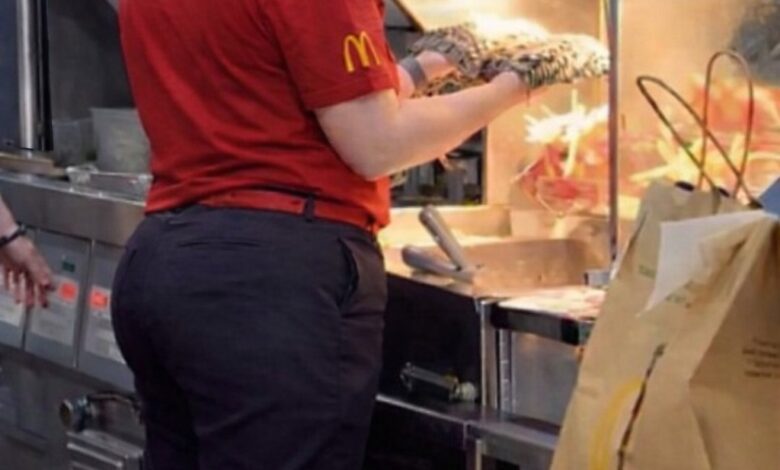
McDonald’s found itself at the center of a viral firestorm after a shocking video from one of its Brisbane locations surfaced online. The clip shows an employee placing a wet mop under a heat lamp meant to keep French fries hot—a move that immediately set social media ablaze and reignited concerns about hygiene in fast-food kitchens.
The footage, captured in plain sight of customers, drew widespread disgust. Another staff member reportedly warned that it was unsafe, but the action continued, prompting witnesses to record the incident and share it across TikTok, X, and Facebook. Debate quickly erupted online over whether a manager had directed the act, though that claim remained unconfirmed.
Viewers were horrified. “How can this even happen in a professional kitchen?” one commenter asked. Others worried that if such behavior occurred openly, what might be happening out of sight? The clip struck a nerve, challenging trust in one of the world’s most recognizable fast-food brands.
McDonald’s Australia responded swiftly. A spokesperson acknowledged the incident and confirmed corrective measures were taken, stressing that the behavior did not reflect the company’s strict food safety protocols. While disciplinary actions weren’t detailed, the brand reassured customers that hygiene and cleanliness remain top priorities across all locations.
Experts note that perception is as critical as procedure in food service. Heat lamps are calibrated to keep food at safe temperatures, and introducing non-food items like a mop—even without direct contact—breaks core hygiene standards. In fast-paced kitchens, employees operate under intense pressure, but training and oversight are designed to prevent exactly this kind of lapse.
The viral incident highlights the power of social media in today’s world. A single short video can rapidly shape public opinion, push corporate responses, and generate headlines worldwide. For multinational chains like McDonald’s, even an isolated incident can ripple across global perceptions, underscoring the importance of consistent standards at every location.
Continue reading on the next page…