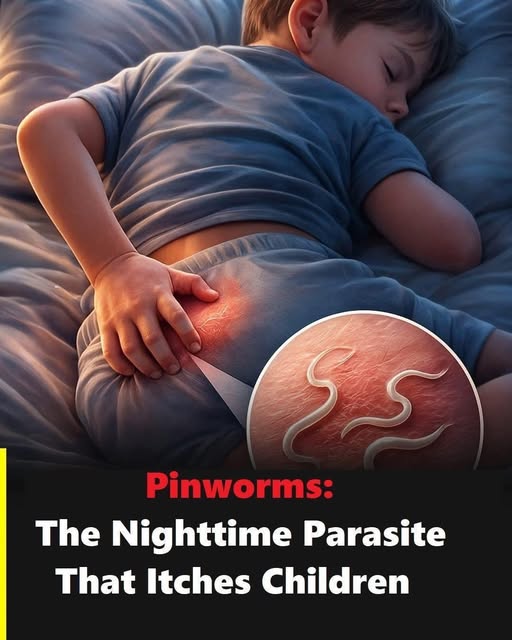
Pinworms, scientifically known as Enterobius vermicularis, are one of the most common intestinal parasitic infections in children worldwide. Although they are not usually dangerous, they can cause considerable discomfort and distress for both children and their families. The infection, known as enterobiasis, spreads easily in environments where children are in close contact, such as homes, daycare centers, and schools.
The infection begins when microscopic pinworm eggs are accidentally swallowed. These eggs are extremely small, lightweight, and invisible to the naked eye. They can survive for up to two to three weeks on surfaces such as toys, bedding, clothing, bathroom fixtures, and even household dust. Children often become infected by touching contaminated objects and then placing their hands in their mouths. Eggs may also collect under fingernails, especially if a child scratches the anal area, making reinfection very common.
Once the eggs are ingested, they pass into the small intestine, where they hatch into larvae. The larvae then migrate to the large intestine (colon), where they mature into adult worms over a period of about two to six weeks. Adult pinworms are small, thin, and white, resembling tiny threads. While male worms typically die after mating, gravid (pregnant) female worms migrate at night to the perianal region to lay thousands of eggs. This nighttime migration causes intense itching around the anus, which is the hallmark symptom of pinworm infection.
The itching often becomes more noticeable at night because the worms are most active during this time. As a result, children may experience restless sleep, irritability, difficulty concentrating during the day, and general fatigue. Persistent scratching can lead to skin irritation, redness, and even secondary bacterial infections if the skin becomes broken. In some cases, pinworms may migrate to the genital area in girls, causing vulvar irritation or discomfort.
Scratching the affected area plays a major role in the spread and recurrence of infection. When a child scratches, eggs can stick to their fingers and under their nails. From there, the eggs may contaminate clothing, bedding, toys, and other surfaces, increasing the risk that the child or other family members will ingest them. Because of this cycle, pinworm infections frequently spread among household members.
Diagnosis is typically straightforward and does not usually require stool samples, as eggs are rarely found in feces. Instead, healthcare providers often recommend the Graham tape test (also called the “tape test”). This involves pressing a piece of clear adhesive tape against the anal area first thing in the morning, before bathing or using the toilet. The tape is then examined under a microscope to detect pinworm eggs. Sometimes the test must be repeated on several consecutive mornings to increase accuracy.
Treatment involves antiparasitic medications such as mebendazole, albendazole, or pyrantel pamoate. These medications are usually given as a single dose and repeated two weeks later to kill any newly hatched worms, since the medications may not destroy all eggs. Because reinfection is common, it is typically recommended that all household members be treated at the same time, even if they do not have symptoms.
Prevention and hygiene measures are essential to break the cycle of reinfection. Frequent and thorough handwashing with soap and warm water, especially after using the bathroom and before eating, is critical. Children’s fingernails should be kept short and clean to reduce egg accumulation. Bedding, pajamas, underwear, and towels should be washed regularly in hot water and dried thoroughly. Daily morning bathing can help remove eggs deposited overnight. Regular cleaning of frequently touched surfaces, including toilet seats, doorknobs, and toys, also reduces transmission.
While pinworm infections are usually mild and easily treated, children who experience severe nighttime itching, persistent symptoms, skin irritation, or recurrent infections should see a pediatrician for proper diagnosis and management. With appropriate medication and consistent hygiene practices, pinworm infections can be effectively controlled and prevented from recurring.