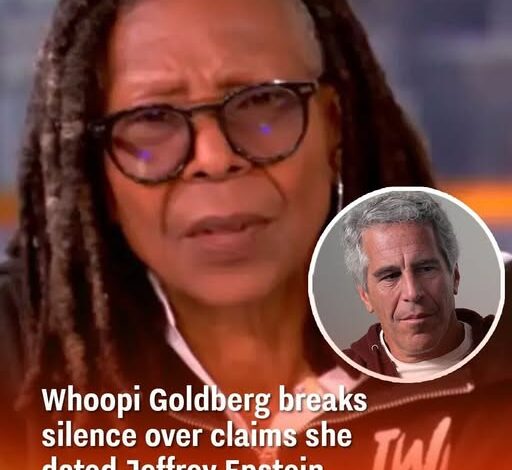
Award-winning entertainer Whoopi Goldberg is speaking out after her name surfaced in recently released files connected to the Jeffrey Epstein investigation. The documents, published by the United States Department of Justice, prompted widespread discussion across social media platforms and digital news outlets, leading to speculation about alleged associations.
Goldberg moved quickly to clarify the situation, addressing the claims directly during a broadcast of The View. She firmly denied having any personal or professional relationship with Epstein and emphasized the importance of reviewing official records in full context before drawing conclusions.
The Context Behind the Documents
According to Goldberg, her name appeared in connection with a 2013 charity event in Monaco. She explained that travel complications arose shortly before the event, and third-party organizers explored multiple transportation options, including reaching out to various private jet owners.
The charitable initiative was connected to musician and philanthropist Julian Lennon. Goldberg clarified that she was invited as a participant and that the charity’s organizers—not she personally—handled transportation logistics.
Importantly, she stated that she never boarded a plane associated with Epstein, never contacted him directly, and never had any form of personal connection. Reports indicate that the transportation request mentioned in the documents was ultimately declined.
Understanding Large-Scale Document Releases
During the discussion, co-host Joy Behar noted that large document releases often contain extensive contact lists, email references, and logistical communications that do not imply wrongdoing. Legal experts frequently caution that appearing in archived correspondence or scheduling inquiries does not equate to involvement in criminal activity.
High-profile investigations, especially those involving public figures, tend to generate strong online reactions. In today’s fast-paced digital media environment, incomplete context can quickly lead to viral narratives that impact reputations and public perception.
Goldberg’s Response: Transparency and Accountability
Goldberg emphasized the need for responsible reporting and careful review of official records. Rather than ignoring the speculation, she addressed it publicly, underscoring the difference between documented logistics and personal association.
Her response highlighted broader issues surrounding digital media ethics, reputational risk, and the importance of fact-based journalism. In an era shaped by viral headlines and online commentary, she encouraged audiences to rely on verified information rather than assumptions.
The Bigger Picture: Media Literacy in the Digital Age
The incident reflects ongoing challenges in modern media—where public records, legal disclosures, and online speculation intersect. Experts in media law and digital communications consistently stress the importance of context when evaluating investigative documents.
For Goldberg, the matter appears to stem from a logistical inquiry tied to a charity event—not from any personal relationship. By addressing the issue directly, she aimed to provide clarity and reinforce the value of transparency.
As conversations around accountability, investigative reporting, and online misinformation continue, this episode serves as a reminder that names appearing in legal documents do not automatically indicate misconduct. Careful analysis and responsible journalism remain essential in protecting both public understanding and individual reputations.