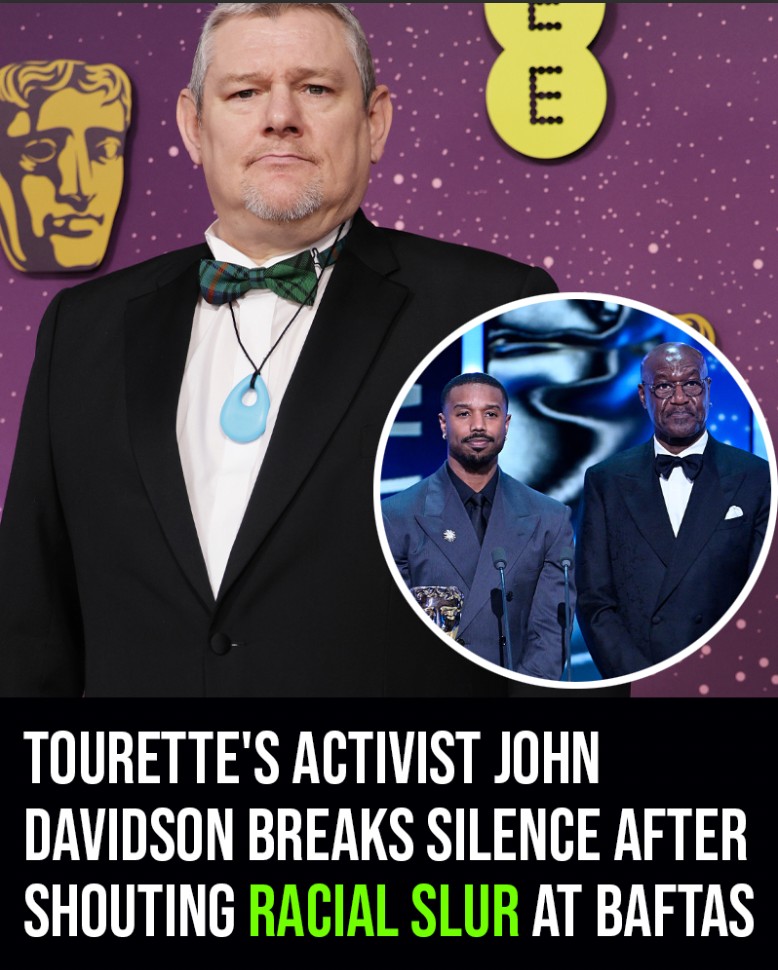
Tourette’s awareness campaigner John Davidson has issued a public statement after an involuntary vocal tic during the BAFTA Film Awards resulted in offensive language being heard during the broadcast.
The moment occurred during Sunday night’s ceremony when actors Michael B. Jordan and Delroy Lindo were presenting the award for Best Special Visual Effects. Davidson, who was seated in the audience, experienced a vocal tic that included a racial slur.
Understanding Tourette Syndrome
Tourette syndrome is a neurological condition characterized by involuntary motor and vocal tics. According to the Centers for Disease Control and Prevention, approximately 1.4 million people in the United States are affected by the disorder.
The National Institute of Neurological Disorders and Stroke explains that Tourette syndrome can cause sudden, repeated movements or sounds that individuals cannot control. Symptoms often begin in childhood and may vary in frequency and intensity over time.
In some cases, vocal tics may include involuntary utterances of inappropriate or offensive words — a symptom known as coprolalia — though this occurs in a minority of individuals with the condition.
Davidson Responds to the Incident
In a statement shared with media outlets, Davidson expressed appreciation for the support he received from BAFTA organizers and attendees.
“I wanted to thank BAFTA and everyone involved for their support and understanding,” he said. “I appreciated the announcement made in advance explaining that my tics are involuntary and not a reflection of my personal beliefs.”
He added that he was “deeply mortified” if anyone interpreted the involuntary outburst as intentional or reflective of his character.
Davidson also chose to leave the ceremony early, explaining that he did not want his symptoms to cause distress for others in attendance.
Film I Swear Highlights Tourette Awareness
Davidson attended the ceremony with the cast and crew of I Swear, a film based on his life and experiences with Tourette syndrome. He emphasized that the project aims to increase public understanding of the condition and promote empathy and inclusion.
“I have spent my life trying to support and empower the Tourette’s community,” Davidson said. “I will continue to advocate for kindness and awareness.”
Official Statements From BBC and Host Alan Cumming
The ceremony was broadcast by the BBC. In a statement, the network acknowledged that viewers may have heard offensive language during the broadcast and clarified that it was the result of involuntary verbal tics associated with Tourette syndrome. The BBC confirmed that the language would be edited out of future versions available on BBC iPlayer.
Host Alan Cumming addressed the audience during the event, explaining that Tourette syndrome is a disability and that vocal tics are not within a person’s control. He apologized to viewers who may have been offended and reiterated that the language was unintentional.
Raising Awareness and Promoting Understanding
The incident has sparked broader discussions about neurological disorders, disability inclusion, and live broadcast challenges. Medical professionals and advocacy groups emphasize the importance of education and empathy when discussing Tourette syndrome and other neurological conditions.
Davidson’s statement underscores a central message: involuntary symptoms do not reflect personal beliefs or intent. As awareness grows, advocates hope increased understanding will reduce stigma and foster a more informed public conversation.