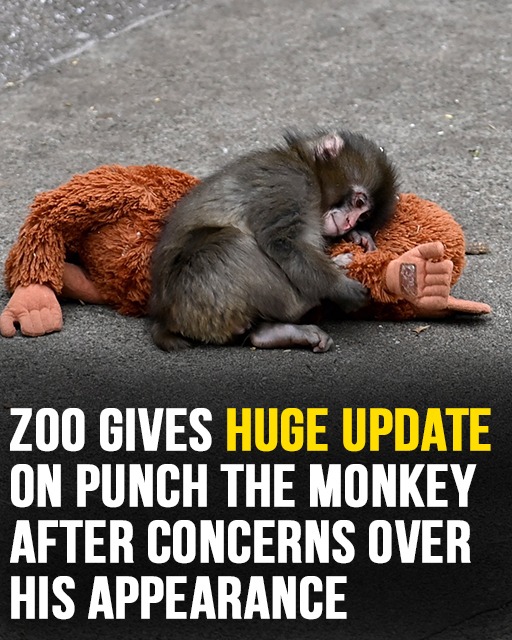
A tiny monkey who captured hearts around the world is making important progress.
After weeks of viral attention and growing animal welfare discussions, Ichikawa City Zoo has released a new update about Punch, the baby Japanese macaque whose story has become a global wildlife sensation.
From Rejection to Rescue
Punch-kun, affectionately called Punch, was born on July 26, 2025, at Ichikawa City Zoo near Tokyo. Shortly after birth, he was rejected by his mother — a difficult start for any primate, especially a Japanese macaque.
Japanese macaques, often called snow monkeys, form strong maternal bonds. Young macaques typically cling to their mothers for months while learning essential survival behaviors like climbing, social interaction, and foraging. Without that bond, early development can be more complex.
Zoo staff immediately stepped in to provide round-the-clock neonatal animal care and enrichment support.
The Stuffed Orangutan That Went Viral
To help comfort the abandoned infant, caretakers introduced soft enrichment items into Punch’s space. Almost instantly, he bonded with a plush orangutan toy from IKEA.
The tiny macaque was soon seen sleeping, eating, and playing while holding onto the stuffed companion. Photos and videos spread rapidly across social media, turning Punch into an international viral animal story.
Crowds at the zoo increased, and online searches for Japanese macaques and zoo animal welfare surged.
But along with admiration came concern.
Viral Video Sparks Welfare Questions
In mid-February, a video showed Punch being pulled by an adult macaque inside the enclosure. After the interaction, he ran to his stuffed toy and held it tightly before retreating to a quieter area.
Some viewers interpreted the moment as bullying and raised questions about zoo animal management.
However, the zoo explained that the behavior was part of natural troop integration.
According to statements shared with People, caretakers had anticipated challenges while introducing Punch into the Japanese macaque troop.
Understanding Primate Social Behavior
Zoo officials emphasized that what may look harsh to human observers can actually be normal “social correction” within macaque hierarchies.
“In order to integrate Punch into other Japanese monkey troops, we anticipated that this kind of challenge may arise,” the zoo said.
Caretakers added that Punch has shown resilience during this transition period.
“While Punch is scolded, he shows resilience and mental strength,” officials explained. “We hope people will support his efforts rather than feel sorry for him.”
2/26(木)のパンチ
— 市川市動植物園(公式) (@ichikawa_zoo) February 26, 2026
飼育員「ぬいぐるみは使わず他の子ザル達と遊んでいました。左腕について『怪我しているのでは?』とご心配の声をいただきましたが、念のため獣医にも診てもらい、特に異状なく元気に過ごしていますよ」#市川市動植物園#がんばれパンチ pic.twitter.com/WNFpaqMS2Q
Encouraging Progress in Troop Integration
On February 23, Ichikawa City Zoo posted a positive update on X.
Staff reported that Punch had been seen playing with other baby monkeys and eating independently — an important milestone in primate development.
“From what I could see, there were no scenes of him being scolded,” the zoo wrote. “He was observed playing with the other baby monkeys. During mealtime, he came down from the keeper’s foot on his own and started eating by himself. He continues to do well!”
Previously, Punch would cling to a keeper when entering the enclosure. The new behavior signals growing confidence.
Addressing Habitat and Health Concerns
The zoo also responded to broader questions about the “monkey mountain” habitat and overall animal welfare standards.
Officials stated that animal welfare remains the top priority and that improvements are ongoing. However, they cautioned that drastic environmental changes could disrupt troop hierarchy and increase stress for Punch.
“To prioritize Punch becoming a member of the troop safely, we are improving living conditions carefully and gradually,” a spokesperson explained.
Behind the scenes, four indoor rooms remain available as private retreat spaces away from public view. Punch uses these areas when he needs quiet time. Staff have also enhanced enrichment structures, including climbing trees favored by younger macaques.
What About Punch’s Hair Loss?
Some fans expressed concern about apparent hair thinning.
The zoo clarified that during winter months, macaques groom more frequently, which can lead to temporary alopecia. Veterinarians continue monitoring Punch’s health, and officials confirmed there are no underlying medical issues.
A Major Milestone: Growing Independence
On February 26, the zoo shared another significant update.
Punch was seen walking upright and confidently interacting with other young monkeys — without his stuffed orangutan.
“He played with the other young monkeys without using his stuffed toy,” the zoo reported.
Caretakers also addressed questions about his left arm, confirming that a veterinary check found no abnormalities. Punch remains energetic and active.
IKEA’s Unexpected Role
Punch’s viral fame even extended beyond the zoo.
After his popularity skyrocketed, IKEA Japan donated additional stuffed animals — including its well-known Djungelskog orangutan plush, the same model Punch bonded with.
Following the publicity, the toy sold out online and reportedly began appearing on resale platforms at significantly higher prices.
A Story of Resilience and Wildlife Care
Punch’s journey highlights the complexities of primate social development, responsible zoo management, and the emotional impact animals can have in the digital age.
What began as a heartbreaking case of maternal rejection has evolved into a story of resilience, adaptation, and global support.
As Punch continues integrating into his troop, supporters worldwide remain hopeful that the young macaque will thrive in a stable, enriched environment for years to come.
What are your thoughts on Punch’s progress?