A former employee of National Park Service is taking legal action after being dismissed from their position at Yosemite National Park, sparking a national debate over free speech rights, federal employment law, and workplace conduct policies.
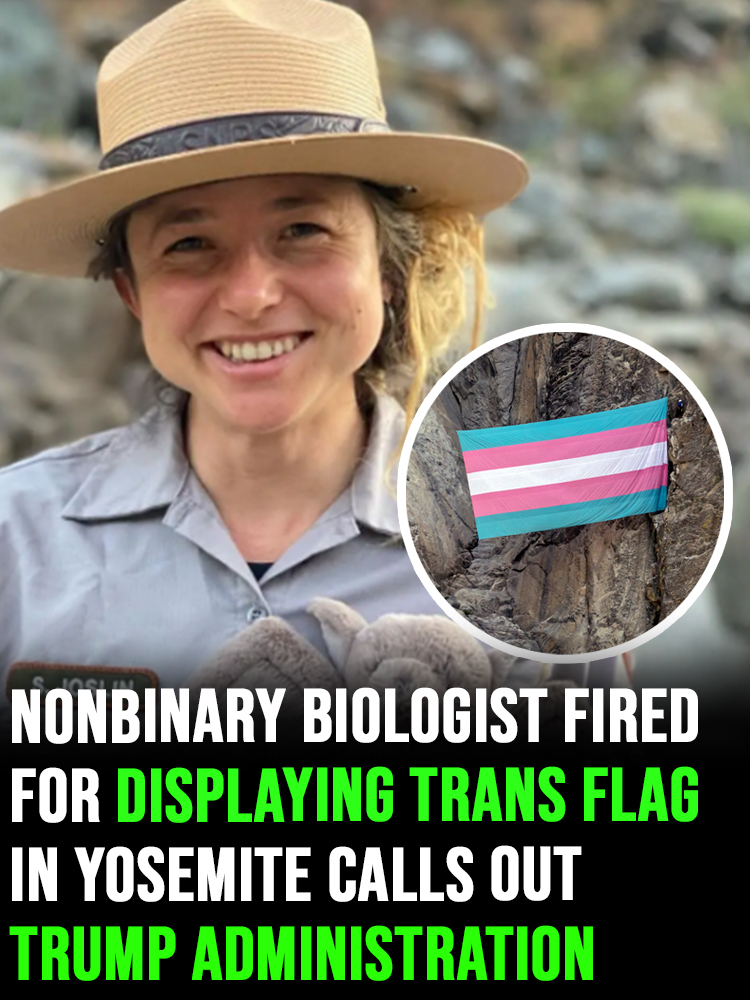
Dr. Shannon “SJ” Joslin, a bat biologist who identifies as nonbinary and uses they/them pronouns, was terminated in August 2025 after hanging a large transgender pride flag from El Capitan earlier that year.
The Incident at Yosemite
In May 2025, Joslin displayed a 55-by-35-foot transgender pride flag from the iconic granite cliff. The banner remained in place for less than three hours. According to Joslin, the action took place while they were off duty and was intended as a message of support for transgender and nonbinary individuals.
Joslin stated that the display was meant to communicate that national parks are welcoming and inclusive spaces.
However, in August 2025, officials with the National Park Service terminated Joslin’s employment, stating that they had “failed to demonstrate acceptable conduct.”
Federal Lawsuit Filed
Following their dismissal, Joslin filed a lawsuit against the United States Department of the Interior and other federal officials, including members associated with the administration of former President Donald Trump.
The lawsuit alleges that the termination violated Joslin’s First Amendment rights under the U.S. Constitution, arguing that the display constituted protected free speech.
In a statement to SFGATE, Joslin said the case is about defending constitutional protections and ensuring that federal employees retain the right to express themselves lawfully.
Their attorney, Joanna Citron Day, contends that the firing was unlawful and seeks immediate reinstatement along with financial damages of at least $1,000.
Free Speech vs. Federal Conduct Rules
The case raises broader questions about the boundaries between political expression and federal workplace regulations. While public employees do retain certain First Amendment protections, courts have historically weighed those rights against government employers’ authority to regulate conduct tied to official roles and public property.
The National Park Service has stated that it takes rules governing demonstrations and the use of federal land seriously but has not commented directly on the pending litigation.
Legal experts note that the outcome may hinge on several factors, including whether the display required a permit, whether it violated safety or operational rules, and whether Joslin’s off-duty status impacts constitutional protections.
A Broader National Conversation
The lawsuit arrives amid ongoing national discussions surrounding LGBTQ+ rights, government employment policies, and constitutional law. Advocacy groups on both sides of the debate are closely watching the case, which could set a precedent regarding expressive conduct by federal employees on government property.
If the court finds in Joslin’s favor, the decision could clarify or expand protections for off-duty speech by government workers. If the ruling supports the agency’s actions, it may reinforce limits on demonstrations involving federally managed landmarks.
For now, the dispute remains before the courts, where it will ultimately be decided whether the flag display was protected expression or a violation of federal employment standards.
As the legal process unfolds, the case highlights the complex intersection of civil liberties, public service regulations, and the evolving national dialogue around free speech in America.