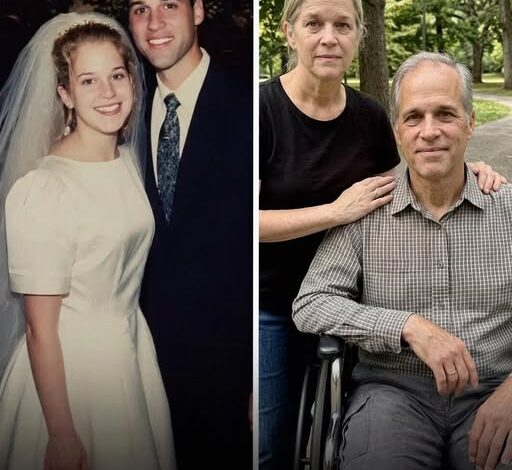
For nearly three decades, I believed that loving someone meant enduring whatever came with them.
When Robert fell from a ladder early in our marriage, I didn’t hesitate. Doctors explained nerve damage and chronic pain. The future we had imagined—children, a bigger home, open possibility—collapsed overnight. I reorganized my life without question. Medications, therapy schedules, insurance battles, modified routines. I became the person who held everything together.
People called me selfless. I never saw it that way. I had made a choice. I intended to honor it.
His condition eventually settled into something doctors described as manageable. Some days a cane. Worse days, a wheelchair. We installed a stair lift, modified the house, and built our lives around his limitations. It became our normal. Years passed quietly inside that structure.
We never had children. First because his recovery was uncertain. Later because I needed heart surgery of my own. Robert told me not to worry about the cost—he’d received money from an old business settlement, he said. I believed him without question. Why wouldn’t I?
Then last Thursday, a canceled meeting sent me home early.
I thought I’d surprise him with lunch.
The silver sedan in the driveway was unfamiliar, but I didn’t think much of it. Inside, the house was unusually quiet. No television. No sounds from his recliner. Then I heard footsteps upstairs—steady, unhurried footsteps that didn’t belong to the man I knew.
I stepped into the hallway and watched from behind a partially open door.
Robert came down the staircase without a cane. No hesitation, no careful placement of each step. Just an easy, confident stride. Behind him was Celia—someone I knew from church. They were laughing.
I recorded a short video before I fully understood why.
Then I left before they saw me.
At my neighbor Dana’s house, the shock slowly hardened into something colder. Dana admitted, carefully, that she had seen Robert walking normally in the yard for months. She had assumed it was part of his therapy. She thought I already knew.
That evening I came home and said nothing. Robert sat in his recliner with the cane propped beside him, talking about pain and fatigue the way he always had. But now I noticed the second glass on the counter. The lemon slices in the trash. The faint trace of Celia’s perfume in the air.
That night, while he slept, I opened our bank accounts.
The transfers were small and vaguely labeled—AUTO, MISC—but they stretched back years. There was also a credit card in his name I had never seen before.
I contacted an attorney the next day. He reviewed the video and financial records and used careful, precise language: hidden marital assets, financial deception, and potential fraud if disability benefits had been collected under false pretenses.
When I finally confronted Robert, I didn’t raise my voice. I showed him the evidence. He had very little left to say.
In that moment, twenty-nine years shifted beneath me.
What I had called devotion began to look like something else entirely—an arrangement quietly sustained by one person’s sacrifice and another’s silence. I had confused endurance with love, and he had let me.
I understand now that love built without honesty doesn’t stay love for long. It becomes obligation. It becomes routine. It becomes the story you tell yourself because the alternative is too large to face.
I faced it.
And it changed everything.