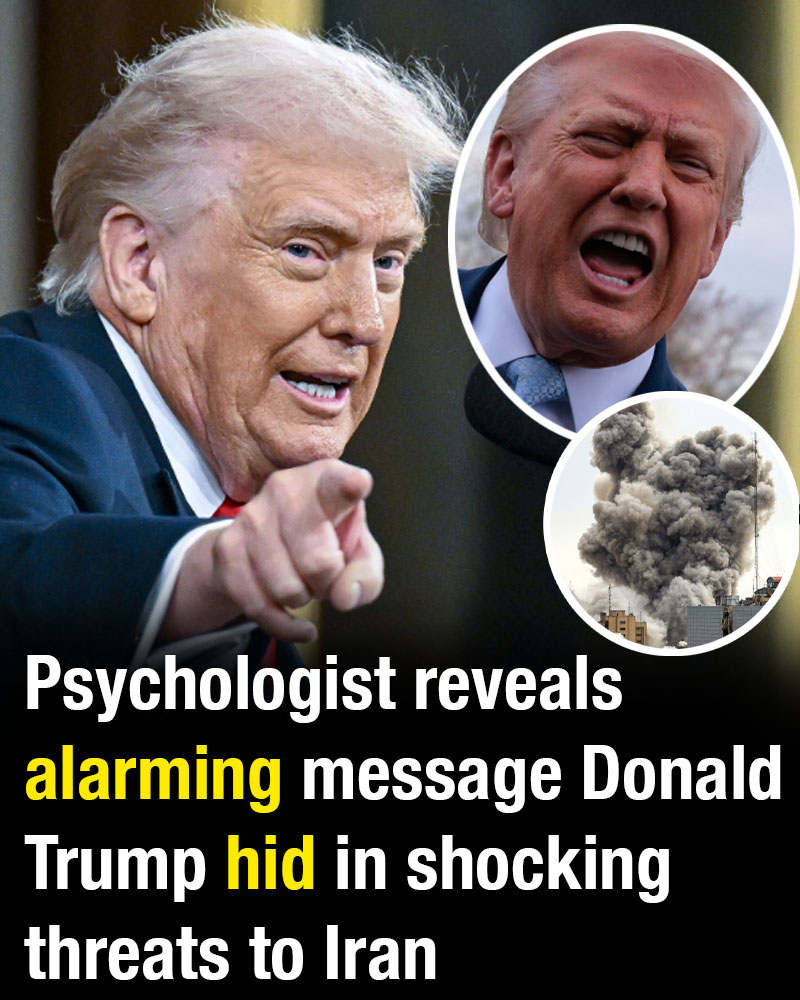
A clinical psychologist has offered insight into the language used by Donald Trump, suggesting that his recent comments about Iran may carry deeper psychological and strategic implications beyond direct political messaging.
The remarks, shared through social media and public statements, drew attention due to their dramatic tone and references to major global consequences. In one post, Trump described a potential turning point involving Iran, framing it as a significant moment in world history and hinting at large-scale change.
The statements followed a speech delivered at the White House, where he discussed rising tensions and outlined strong positions regarding Iran’s actions and future negotiations. His comments included references to military capability and firm deadlines tied to diplomatic outcomes, placing the situation within the broader context of international relations and global security.
According to clinical psychologist Dr Tracy King, the language used in both the speech and online posts appears intentional and carefully structured. She noted that the messaging relies heavily on themes such as power, control, and decisive action.
Dr. King explained that repeated use of highly intense or dramatic wording can influence how audiences process information. She suggested that such communication may heighten emotional responses—such as concern, urgency, or anticipation—while reducing the space for more measured analysis.
From a psychological perspective, she also observed that the messaging frequently centers around Trump himself. Even when discussing broader geopolitical developments, the narrative often returns to his role, perspective, and decision-making.
This, she said, may reflect an effort to reinforce a particular leadership image. By positioning himself at the center of major global developments, the communication can project authority, control, and involvement during critical moments.
Dr. King added that this approach could also serve to shape public perception, especially in response to any narratives that might question leadership strength or presence. The messaging, in her view, emphasizes decisiveness and command.
At the same time, she suggested that such language may also be directed externally. In the context of global tensions, maintaining an element of unpredictability can be interpreted as part of a broader strategic communication style, potentially influencing how opposing sides assess risk and response.
This analysis highlights how political communication can operate on multiple levels—combining policy messaging with psychological impact—especially during periods of heightened international focus.