An organized, picture-perfect life can feel like the ultimate achievement. For years, I believed that if everything looked polished on the outside, then everything underneath must be solid too. My mother, Nancy, raised me to value appearances, stability, and social respectability. Clean porch steps, pressed linens, curated flowerbeds—these were the signs of success in our suburban world.
At thirty-eight, I had built what many would call a comfortable lifestyle: a loving husband, two children, a beautiful home, and the kind of peaceful neighborhood that real estate agents describe as “ideal for families.” I thought I understood my past. I thought there were no hidden chapters.
I was wrong.
When my elderly neighbor, Mr. Whitmore, passed away, I expected the usual quiet sadness that comes with losing someone familiar. He had lived next door for decades—a polite man who waved from behind his fence, offered small talk about the weather, and handed out extra candy on Halloween. He was simply part of the landscape of my life.
The day after his funeral, I discovered something that shattered everything I believed about my family history.
Inside my mailbox was a thick, cream-colored envelope with my name written in elegant blue ink. My husband, Richie, stood beside me on the porch as I opened it. The letter was brief but deeply unsettling:
“If you are reading this, I am no longer here. I have been keeping something hidden for forty years. In my backyard, under the old apple tree, there is a secret. You deserve to know the truth. Please tell no one.”
The message felt heavy in my hands. For the rest of the day, I couldn’t focus. My eyes kept drifting toward the old apple tree in his yard. It no longer looked ordinary—it felt like a marker for something buried in more ways than one.
The next morning, unable to ignore the curiosity, I went alone.
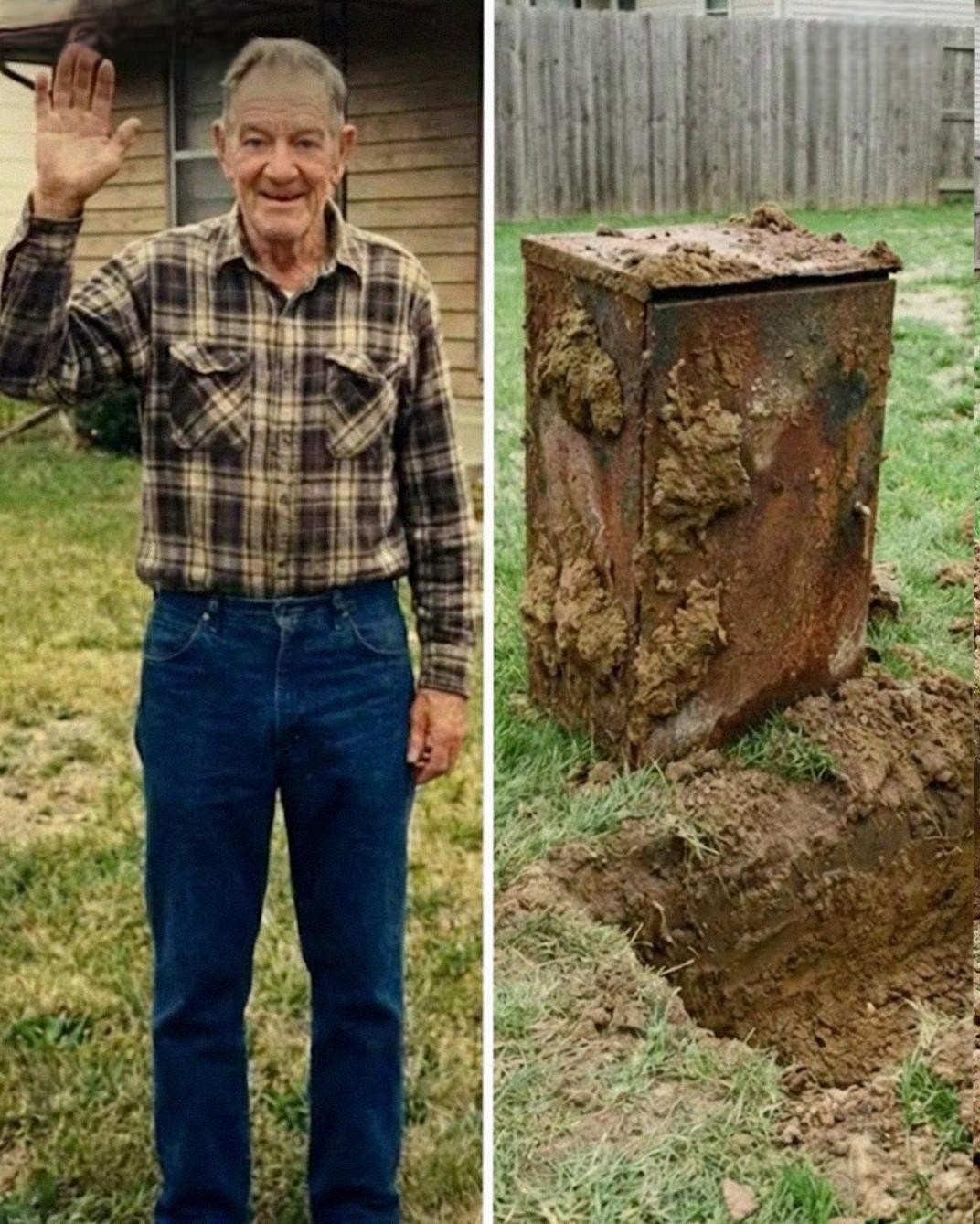
The grass was overgrown, and the soil beneath the apple tree was soft. After a few minutes of digging, my shovel struck metal. I uncovered a small, rusted lockbox.
Inside was a photograph and a hospital bracelet.
The photo showed a young man holding a newborn baby under bright hospital lights. His expression was a mix of fear and awe. Beneath the image was a folded letter addressed to me.
“My dear Tanya,” it began. “I never abandoned you. I was forced to leave.”
The truth unfolded in careful handwriting.
Mr. Whitmore—my quiet neighbor—was my biological father.
He explained that when my mother was nineteen, her family pressured her to cut ties with him. They believed he would damage her future and social standing. Facing ultimatums and threats of being disowned, she complied. He was removed from our lives before I could remember him.
But he never truly left.
After learning where we lived, he bought the house next door. For forty years, he watched me grow up from a distance—attending school events quietly, witnessing milestones from behind a fence, remaining silent to protect the version of reality my mother had chosen.
“You deserve the truth,” he wrote. “You are my daughter.”
I sat in the dirt, overwhelmed. The neighbor who fixed my bicycle and waved good morning wasn’t just a kind man—he was my father. He had stayed close, sacrificing recognition and connection, simply to be near me.
Telling my husband was difficult. Confronting my mother was even harder.
When she arrived at my house and saw the photograph on the table, her composure disappeared. For the first time, she looked not like the controlled, confident woman who raised me, but like a frightened teenager facing impossible choices.
She insisted she believed she was protecting me. Her parents had pressured her. They convinced her that growing up without a “complicated” father would offer me more stability.
But stability built on secrecy has a cost.
“You didn’t protect me,” I told her quietly. “You protected yourself.”
The following days were filled with emotional conversations and long-overdue honesty. Some family members defended her decision, calling it a necessary sacrifice. But I finally allowed myself to acknowledge something important: I had lost decades with my father. And he had lost decades with his child.
For the first time, my mother didn’t deflect. She didn’t argue. She simply apologized.
That apology didn’t erase the past. It didn’t restore lost time. But it marked the beginning of something more genuine than the polished version of family life I had always known.
A week later, I visited Mr. Whitmore’s grave, carrying blossoms from the apple tree that had hidden his secret for so many years. My grief was layered—mourning the neighbor I thought I knew and the father I had just discovered.
I wished he had told me sooner. I wished we had shared dinners instead of fences. But I also understood the quiet devotion behind his choice to stay nearby.
Life doesn’t always follow straight, predictable lines. Sometimes it curves through hidden truths, difficult conversations, and unexpected revelations. My carefully managed image of the past has been replaced by something more complicated—but also more authentic.
The secret is no longer buried.
And for the first time, I understand where I come from.