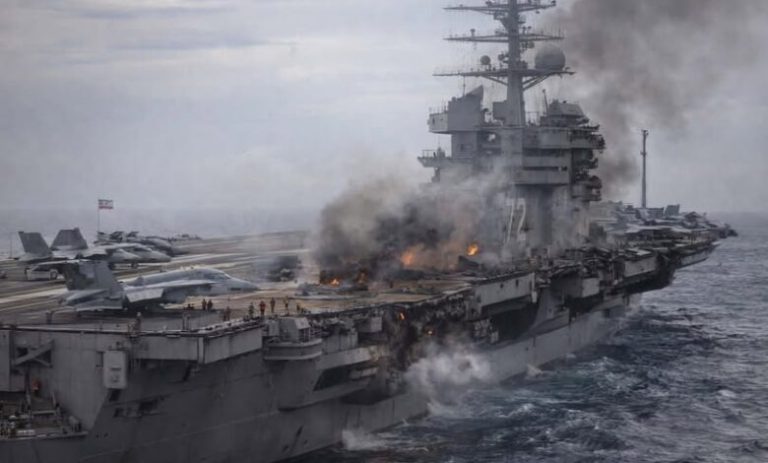
Tensions Explode in the Gulf: The USS Abraham Lincoln and a Crisis That Could Reshape the Middle East
As of March 2, 2026, the waters of the Gulf and Arabian Sea have become a global flashpoint. Reports of a strike on the USS Abraham Lincoln, a Nimitz-class nuclear-powered aircraft carrier, have sparked fears of a full-scale regional conflict. The claim came from Iranian state-linked media and officials in the Islamic Revolutionary Guard Corps (IRGC), alleging the carrier was hit by four ballistic missiles in retaliation for joint U.S.-Israeli operations two days earlier.
However, U.S. defense officials have firmly denied the reports. The Lincoln remains operational, continuing its mission in the Arabian Sea, protected by advanced Aegis systems and coastal geography. Still, the fog of conflicting claims has created a tense, high-stakes standoff watched closely by global leaders, analysts, and markets alike.
A “New Phase” of Retaliation
Iranian media described the alleged strike as part of “Operation True Promise 4,” framing it as a direct response to U.S.-Israeli strikes on February 28 that targeted Iranian leadership and critical infrastructure. The IRGC warned that land and sea would become “graves for terrorist aggressors,” signaling a sharp escalation in rhetoric and strategy.
For Tehran, claiming a hit on an aircraft carrier is both symbolic and tactical. These ships are floating airbases with thousands of personnel and billions in advanced technology. A successful strike would be a powerful demonstration of reach and retaliation—though, in this case, Washington insists no missiles came close.
Washington Fires Back
Continue reading on next page…