The Moment Everything Shifted
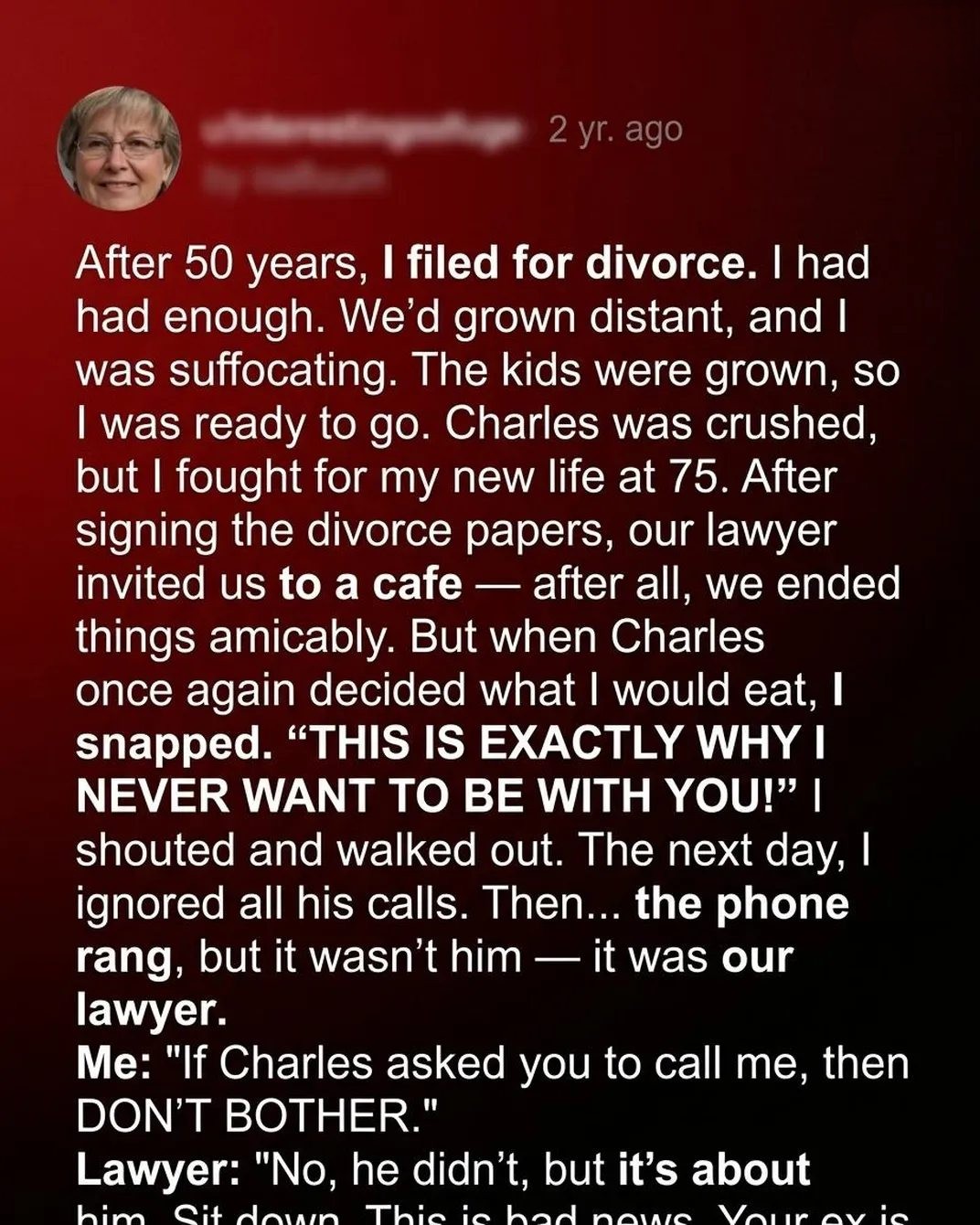
They sat across from each other in a familiar silence, the kind that had filled their home for years. When the waitress arrived, Charles ordered for both of them out of habit, assuming nothing had changed.
That small gesture became the breaking point.
For the first time, Eleanor spoke up. Not softly. Not carefully. But clearly.
She said she didn’t want him choosing for her anymore—not meals, not decisions, not her life.
Then she stood up and walked away.
It wasn’t dramatic. It was final.
A Life Reclaimed in Small, Quiet Ways
The next morning, Eleanor woke up alone in her new apartment. The silence felt unfamiliar, but not uncomfortable. It felt open.
There were no schedules to follow, no expectations to meet. Just space.
She ignored the phone calls, the messages, and the noise of concern from others who didn’t understand her choice. For the first time in years, she wasn’t responding to anyone else’s needs.
She was simply existing for herself.
A Call That Changed the Direction of Everything
That sense of calm was interrupted when she received a call from Charles’s doctor. He had suffered a serious medical emergency.
The news hit hard, not because it changed her decision, but because it reopened emotions she thought she had already set down.
Suddenly, Eleanor was pulled back into a hospital world she had just left behind—corridors, machines, and quiet uncertainty.
Standing Between History and Independence
At his bedside, Eleanor faced a complicated truth.
She was no longer his wife in a legal sense, but she was still the person who knew him most deeply. Their shared history hadn’t disappeared, even if their marriage had ended.
What she discovered in those hospital visits was unexpected clarity.
She could care about him without belonging to him.
She could show compassion without surrendering herself again.
Learning That Love Can Change Form
As Charles slowly recovered, their conversations became simpler and more grounded in the present. There were no expectations to fix the past or rebuild what had ended.
Instead, there was understanding.
Eleanor began to see that love doesn’t always remain in one shape forever. Sometimes it evolves into respect, memory, and quiet acknowledgment.
And that, too, is valid.
A New Kind of Freedom in Later Life
Eleanor’s days began to take on a different rhythm. She joined small community activities, explored hobbies she had once ignored, and made choices without needing approval.
Nothing about her life became extravagant or dramatic. It became intentional.
She learned to enjoy ordinary moments—morning routines, quiet reading, simple walks—without attaching them to responsibility or obligation.
Conclusion: It Is Never Too Late to Begin Again
By her seventy-sixth year, Eleanor understood something she hadn’t fully grasped before.
Ending a long chapter doesn’t erase its value—it makes space for something new.
Her story was not about loss, but about rediscovery. Not about rejection, but about reclaiming identity after decades of quiet disappearance.
She had not abandoned her past. She had finally stopped living inside it.
If this story resonated with you, take a moment to reflect—what part of your own life might be waiting for you to choose yourself again?