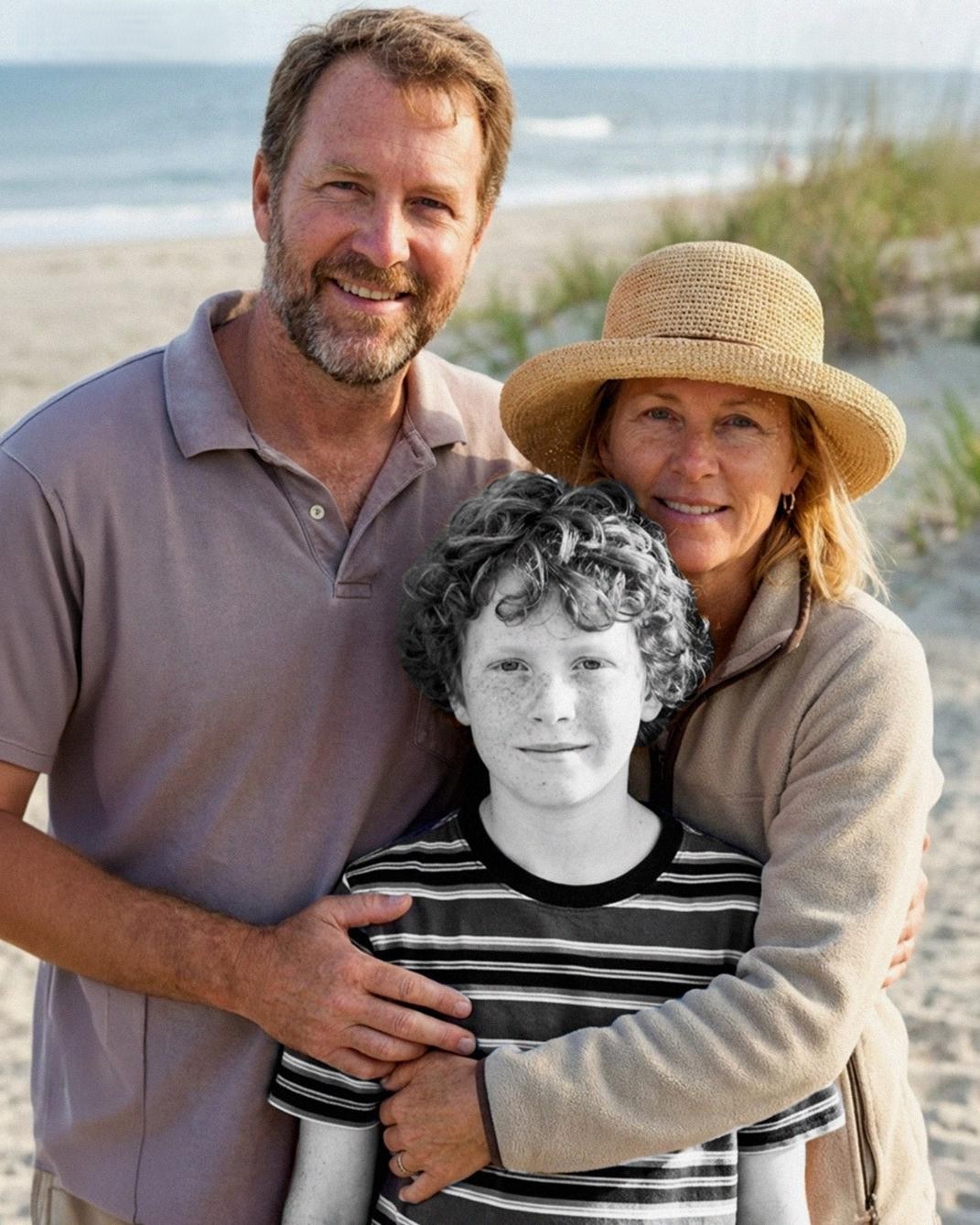
The quiet inside a child’s bedroom can feel overwhelming after loss. For weeks, that silence defined my life as I sat on the edge of my son Owen’s bed, holding onto small reminders of him. At just thirteen, he was taken from us during a sudden storm at the lake—an unexpected tragedy that came after he had bravely spent two years fighting cancer. We believed the hardest part was behind us.
Instead, we were left without closure, without answers, and without him.
In the aftermath, my husband Charlie seemed to drift further away each day. Grief affected us differently. While I held onto memories, he withdrew completely—leaving early, coming home late, and speaking very little. It felt like I was losing not just my son, but my partner as well.
Everything changed with a phone call from Owen’s teacher. She had discovered a letter in her classroom, written in Owen’s handwriting and addressed to me. Holding that envelope brought back a flood of emotion. Inside wasn’t just a message—it was a set of instructions that would reveal something I never expected.
Owen asked me not to confront his father directly. Instead, he told me to quietly observe—to follow Charlie after work and then check beneath a loose floor tile in his room. Confused but compelled, I followed through.
That same day, Charlie told me he’d be working late. But when I followed him, his destination wasn’t an office—it was a children’s hospital, the same place where Owen had received treatment. Curious and concerned, I went inside.
What I discovered changed everything.
Charlie had been secretly volunteering, bringing joy to children facing serious illness. Dressed in a bright costume, he entertained young patients with simple tricks, humor, and kindness. It was a side of him I hadn’t seen in months—a version of him that was still capable of warmth and connection, even while carrying deep grief.
When I finally spoke to him, the truth came out. He had started this during Owen’s treatment, after hearing how much it meant for kids to have moments of laughter during difficult times. After Owen passed, Charlie continued—but kept it hidden, unsure how to explain it while we were both struggling.
That night, we returned home together and followed Owen’s final instruction. Beneath a loose tile in his room, we found a small box. Inside was a handmade wooden sculpture of our family—simple, but deeply meaningful. There was also another note.
In it, Owen explained that he had known about his father’s quiet acts of kindness. He wanted me to discover it on my own, believing it would help us understand each other again. Even at such a young age, he understood how grief could separate people—and he wanted to bring us back together.
Charlie then shared one more deeply personal detail: a tattoo he had gotten in Owen’s memory, which he had kept hidden while it healed. It was another example of how he had been coping privately, trying to process loss in his own way.
That moment shifted everything. Instead of feeling alone in grief, we began to see each other again—not just as individuals hurting, but as parents who shared the same love and loss.
This experience is a reminder that grief doesn’t look the same for everyone. Some people express it outwardly, while others carry it quietly. But with understanding, communication, and time, healing can begin.
Owen’s final message didn’t just reveal a secret—it gave us a path forward. And in that, he left us one last gift: a way to reconnect, remember, and start healing together.