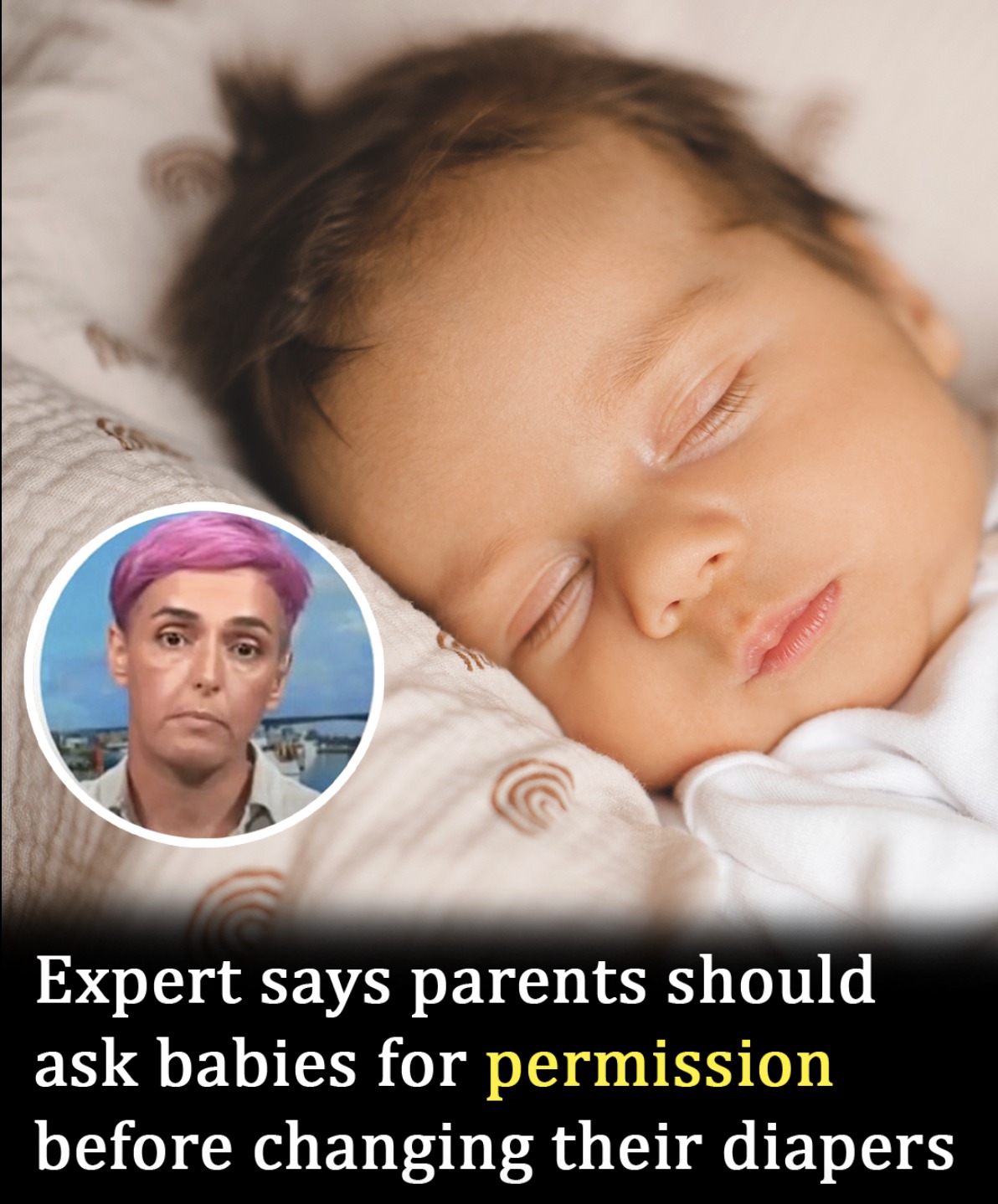
The discussion began when Deanne Carson, who describes herself as a sexuality educator, speaker, and author, shared her view that building a “culture of consent” should start at birth. Her comments quickly went viral, igniting conversations across social media, parenting forums, and digital news platforms.
Teaching Consent From Day One?
In today’s world of modern parenting strategies and child development research, topics like emotional intelligence, respectful communication, and bodily autonomy are increasingly part of everyday discussions.
Carson argues that even routine caregiving moments — such as changing a diaper — can become opportunities to model respect.
Her suggestion? Narrate what you are about to do and pause briefly for engagement. For example:
“I’m going to change your diaper now, is that okay?”
Critics point out that newborns and infants cannot verbally respond. Carson acknowledges this, explaining that the goal is not to receive a spoken “yes,” but to begin modeling respectful communication and recognizing non-verbal cues.
In an interview with Australia’s Australian Broadcasting Corporation, she clarified that the idea is about creating a two-way communication pattern — even before a child can speak.
“Of course, a baby isn’t going to say, ‘Yes, Mum, I’d love that,’” she noted. “But if you pause, make eye contact, and observe their body language, you are showing that their response matters.”
The Parenting and Child Development Perspective
Many pediatric specialists emphasize the importance of responding to an infant’s non-verbal communication — facial expressions, coos, crying, and movement. Research in early childhood development shows that this responsive interaction supports secure attachment and healthy emotional growth.
From this perspective, narrating caregiving actions could reinforce trust and predictability, both of which are central to infant development and long-term mental health.
The broader concept of bodily autonomy education — teaching children that their bodies deserve respect — has become a significant topic in parenting resources and family psychology.
Strong Reactions From Critics
Despite the developmental framing, Carson’s suggestion drew sharp criticism from some commentators.
Rowan Dean, editor of The Spectator Australia, dismissed the idea as unnecessary.
Similarly, psychologist and parenting columnist John Rosemond criticized the proposal in the Reno Gazette Journal, arguing that infants are too young to grasp the concept of consent and that caregiving decisions fall squarely within parental responsibility.
Online, reactions ranged from skepticism to satire. Some social media users questioned whether similar logic would apply to pets, while others argued that a crying baby already signals discomfort and therefore a need for immediate action.
A common concern raised by critics was practicality — emphasizing that hygiene, health, and safety must remain the priority when caring for infants.
Supporters Say It’s About Communication, Not Permission
While the backlash was loud, Carson also received support from parents and child development advocates.
Some argued that speaking respectfully to babies and acknowledging their reactions builds stronger emotional bonds. Others suggested that the controversy may stem from misunderstanding the intent behind the advice.
Supporters emphasized that infants cannot legally or cognitively “consent” in the adult sense. Instead, they view the practice as modeling respect, strengthening parent-child communication, and encouraging awareness of non-verbal cues.
One online commenter summarized the middle ground: the concept may sound extreme in wording, but the underlying principle — respectful interaction — aligns with many modern parenting philosophies.
The Bigger Conversation: Respectful Parenting in 2026
The debate highlights a broader shift in parenting culture. Topics like positive discipline, emotional regulation, and child psychology are becoming mainstream, supported by research in developmental science.
Whether or not parents choose to verbalize diaper changes as Carson suggests, many experts agree on one point: responsive caregiving — observing, engaging, and communicating with infants — plays a crucial role in early childhood development.
For some families, incorporating consent-based language may feel like a natural extension of respectful parenting. For others, maintaining attentive care without formal phrasing may feel more practical.
A Parenting Choice Shaped by Values
At its core, the discussion is less about diapers and more about how families choose to introduce concepts like respect, boundaries, and communication.
Parents ultimately make decisions based on their comfort level, cultural values, and understanding of child development. What remains consistent across expert advice is the importance of nurturing trust, safety, and emotional connection from the very beginning.
As parenting strategies continue to evolve, conversations like this reflect a growing interest in raising children with empathy, awareness, and strong communication foundations — even in the smallest everyday moments.