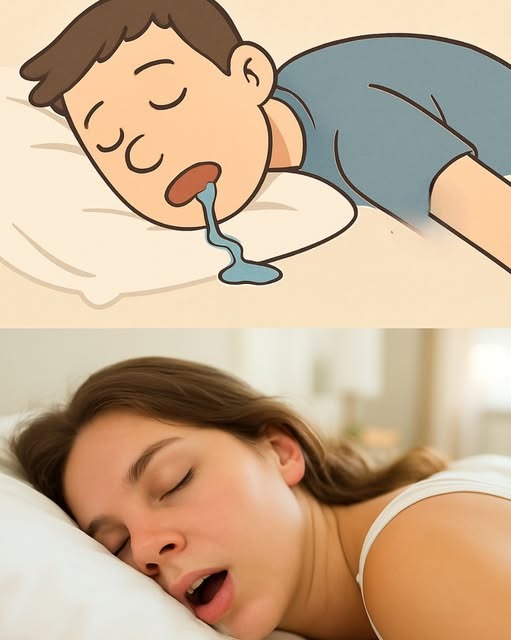
Another major factor is nasal congestion. When someone has a cold, allergies, or sinus issues, they may breathe through their mouth more often during sleep. Mouth breathing increases the likelihood of drooling because the mouth remains open for longer periods.
Certain sleep disorders can also play a role. Conditions like sleep apnea can lead to mouth breathing and disrupted sleep patterns, which may increase saliva leakage during the night. In these cases, drooling is usually just one of several symptoms.
Even medications that increase saliva production or affect muscle control can contribute in some situations, though this is less common.
Is it a problem?
For most people, occasional drooling during sleep is completely harmless. It often reflects normal relaxation and sleeping posture rather than a medical issue. Many people experience it from time to time without noticing any underlying health concern.
However, if drooling becomes excessive or is accompanied by other symptoms—such as loud snoring, choking during sleep, or frequent daytime fatigue—it may be worth paying attention. In those cases, it could be linked to an underlying sleep-related condition that may need evaluation.
The bottom line
Drooling while sleeping is usually just a side effect of a relaxed body, open mouth, or blocked nasal passages. While it can be inconvenient or slightly uncomfortable, it is rarely a cause for concern on its own.
For most people, it simply comes down to how—and how deeply—the body rests at night.