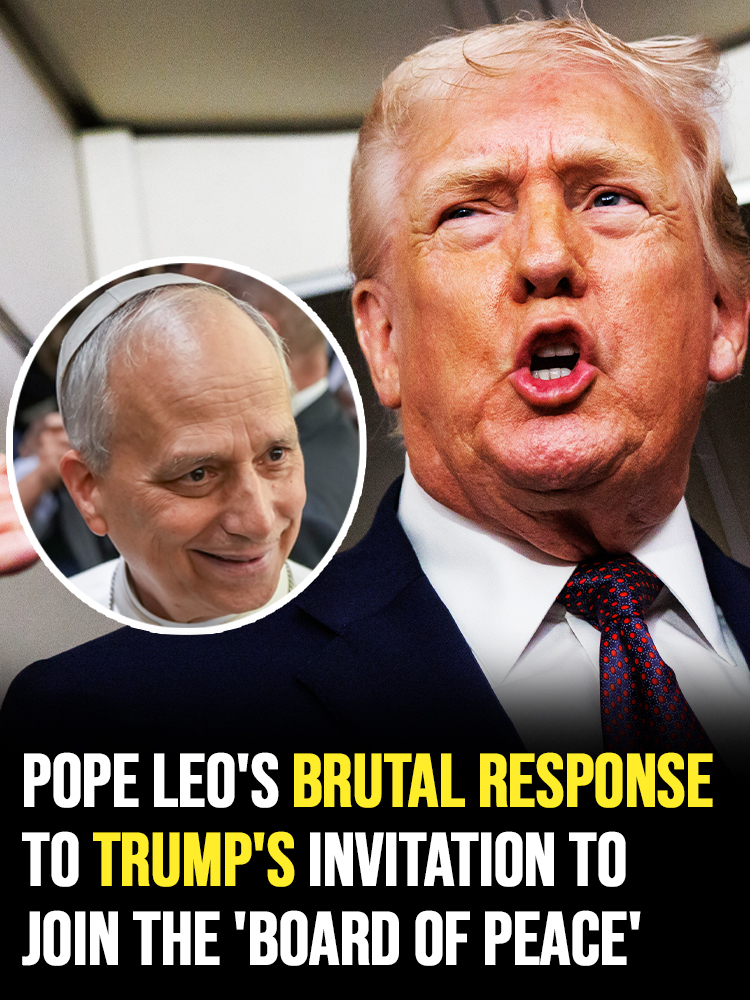
President Donald Trump recently unveiled a new international initiative called the “Board of Peace,” describing it as a diplomatic effort aimed at resolving major global conflicts, including the ongoing crisis in Gaza.
The proposal reportedly includes a $1 billion contribution requirement for countries seeking permanent membership. While several nations — including Germany, Canada, France, Italy, Norway, Sweden, the United Kingdom, and Ukraine — declined to participate, others such as Israel, Argentina, Russia, Hungary, and Saudi Arabia signaled support for the initiative.
Among those invited to join was Pope Leo, leader of the Roman Catholic Church. This week, the Vatican confirmed that he will not take part.
Vatican Responds to the Invitation
When first approached in January, Vatican officials stated that the Pope was reviewing the proposal and would take time to consider it. Now, the Holy See has made its position clear.
According to Cardinal Pietro Parolin, the Vatican’s Secretary of State and chief diplomat, the Pope believes that complex international conflicts — particularly those involving humanitarian crises — should be addressed through established multilateral institutions such as the United Nations rather than through a board led by a single nation.
The Vatican’s response signals a preference for traditional diplomatic frameworks and international cooperation mechanisms when addressing global security and peacebuilding efforts.
Alignment With Broader Vatican Positions
While Pope Leo did not personally issue a detailed public explanation, the decision is consistent with his recent remarks on global affairs. He has frequently emphasized the importance of human rights, refugee protections, and the moral responsibilities of world leaders.
In past statements, the Pope has warned that freedom, dignity, and humanitarian principles must remain central in political decision-making — particularly during periods of armed conflict and displacement.
The Vatican has historically supported multilateral diplomacy, especially through institutions like the United Nations, when it comes to peace negotiations and international development initiatives.
Global Reaction to the Proposal
The “Board of Peace” has generated mixed reactions across political and diplomatic circles. Supporters argue that new international structures could accelerate decision-making and conflict resolution. Critics question the funding structure and governance model.
As discussions continue, the Vatican’s decision not to participate highlights differing perspectives among global leaders on how best to address complex geopolitical challenges.
What are your thoughts on the role of religious institutions in international diplomacy?