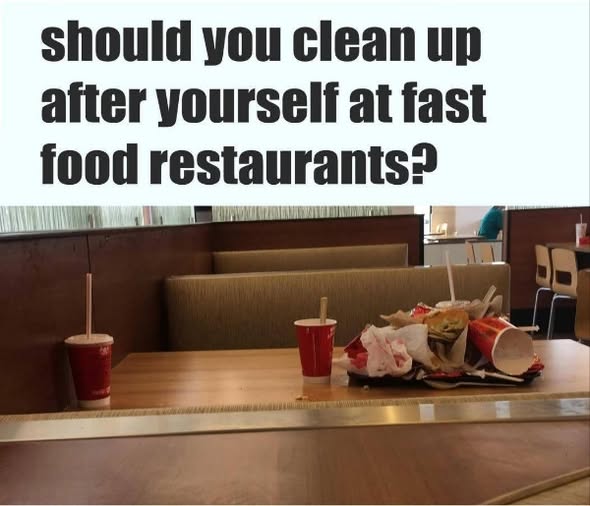
Dining at a fast food restaurant may seem simple: you place an order, pay for your meal, eat, and leave. Yet one small decision—whether to throw away your trash or leave it on the table—reveals a larger conversation about personal responsibility, customer service expectations, and respect for shared public spaces.
At first glance, it’s just about a tray and a trash bin. But in reality, this everyday choice reflects how we view service industry workers, commercial transactions, and our role in maintaining clean, welcoming environments.
The Case for Cleaning Up After Yourself
For many customers, disposing of wrappers, cups, and trays in designated trash bins is simply common courtesy. The modern quick-service restaurant model is largely built around self-service. Customers order at a counter or kiosk, carry their own food, refill their drinks, and often bus their own tables.
From this perspective, throwing away your trash is a natural extension of that system. It helps maintain restaurant cleanliness, improves dining area hygiene, and makes the space more pleasant for the next guest. In busy locations—especially during peak lunch or dinner hours—staff members are often responsible for food prep, drive-thru orders, mobile orders, and customer support simultaneously. Clearing your own table can reduce unnecessary strain on employees who already manage tight schedules.
There’s also a practical side. A clean table turnover improves customer experience, speeds up seating availability, and helps maintain overall food safety standards. In an industry where operational efficiency and sanitation matter, small actions from customers can have a measurable impact.
The Transactional View: “It’s Part of the Service”
On the other hand, some diners believe that cleaning the dining area is strictly the responsibility of the business. After all, they’ve paid for their meal. In this view, restaurant management is responsible for maintaining cleanliness, just as they are responsible for mopping floors or sanitizing counters.
Some customers argue that by cleaning up after themselves, they are effectively performing unpaid labor for large corporations. They see table cleaning as part of what the menu price covers. From this angle, self-cleanup may feel like a gradual shift of operational responsibility from business owners to consumers—especially in a time when food prices continue to rise.
This viewpoint draws a clear line between customer and employee roles: the customer pays, and the restaurant provides full service—including cleanup.
What Fast Food Restaurants Actually Expect
In practice, most quick-service restaurants are designed with the expectation that customers will dispose of their own trash. Visible waste stations, tray return shelves, and clear signage support this model. However, this expectation generally applies to basic cleanup—throwing away packaging and stacking trays—not deep cleaning or sanitizing surfaces.
No one expects a customer to disinfect tables or sweep the floor. The core issue is leaving behind large messes: half-eaten food, spilled sauces, piles of napkins, and scattered trash. These situations slow down operations and can negatively affect other guests’ dining experiences.
When a table is left messy, the next customer may be forced to wait, clean it themselves, or sit in discomfort. In high-traffic locations, this creates unnecessary friction that could be avoided with minimal effort.
The “Job Creation” Argument
Some claim that leaving a mess supports employment by ensuring staff have work to do. However, restaurant employees typically have detailed task lists that include food preparation, customer service, stocking supplies, drive-thru management, and health compliance duties. Extra cleanup from avoidable messes rarely improves job security. Instead, it can disrupt workflow and increase stress in an already fast-paced environment.
In the food service industry, speed, cleanliness, and efficiency are key performance metrics. Preventable messes create bottlenecks rather than opportunities.
A Middle Ground: Practical Courtesy
Ultimately, the debate isn’t about legal obligation—it’s about social norms and shared space etiquette. Fast food dining sits somewhere between full-service restaurants and complete self-service environments. While businesses are responsible for maintaining sanitation standards, customers can contribute to a smoother, more respectful experience.
Clearing your tray takes less than a minute. Yet it improves table availability, supports a clean dining environment, and shows consideration for both employees and fellow customers.
Public spaces function best when people treat them with a sense of shared ownership. A fast food restaurant is used by hundreds of people daily. Small, practical actions—like throwing away your trash—help maintain comfort, cleanliness, and efficiency for everyone.
The Bigger Picture
This discussion reflects broader changes in customer service expectations, automation, and self-service technology. As ordering kiosks, mobile apps, and digital payments become more common, the line between “service provided” and “self-service responsibility” continues to evolve.
Still, one principle remains clear: shared environments benefit from shared effort. Whether or not a restaurant requires customers to clean up, choosing to do so demonstrates awareness of others and respect for the space.
In the end, it’s not just about fast food etiquette. It’s about recognizing that everyday choices—however small—shape the quality of our public experiences. A quick trip to the trash bin may seem insignificant, but multiplied across hundreds of customers, it makes a meaningful difference.
In a world built for speed and convenience, taking a moment to leave a clean table behind is a simple way to contribute to a better dining experience for everyone.