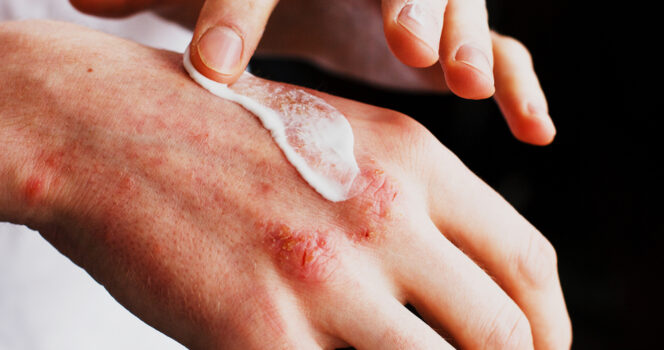
Guttate Psoriasis
Often triggered by infections like strep throat, this type mostly affects children and young adults. It shows as small, drop-like spots on the torso, arms, or legs.
Key Features:
- Size: Tiny, teardrop-shaped
- Trigger: Bacterial infections
- Location: Torso and limbs
Inverse Psoriasis
This type hides in skin folds—groin, under the breasts, or buttocks—appearing as smooth, shiny, red patches. Friction and sweat can worsen it, and fungal infections are a common trigger.
Key Features:
- Texture: Smooth and shiny
- Location: Skin folds
- Irritation: Worsens with friction and sweat
Pustular Psoriasis
A dramatic, less common form, pustular psoriasis creates white pustules on inflamed skin. It may appear locally on hands or feet or spread across the body.
Key Features:
- Appearance: Blisters with non-infectious pus
- Symptoms: Fever, chills
- Severity: Localized or widespread
Medical Alert: Seek immediate care if you notice pustules—they can signal serious complications.
Erythrodermic Psoriasis
The rarest and most severe type, erythrodermic psoriasis causes widespread redness, peeling, and severe pain. It can be life-threatening and often requires hospitalization.
Key Features:
- Appearance: Redness, shedding skin
- Symptoms: Pain, severe itching, swelling
- Triggers: Sunburn, infection, or sudden medication changes
Nail and Joint Concerns
Psoriasis can affect nails, causing pitting, thickening, discoloration, or detachment. Nail changes may indicate psoriatic arthritis, which affects the joints.
Take Control of Your Psoriasis
Recognizing the signs of psoriasis empowers you to seek timely care and manage your health proactively. Early diagnosis and treatment can prevent complications and improve quality of life.
Share Your Experience: How do you manage psoriasis? Comment below and share this story with friends to help raise awareness and support others in the community.