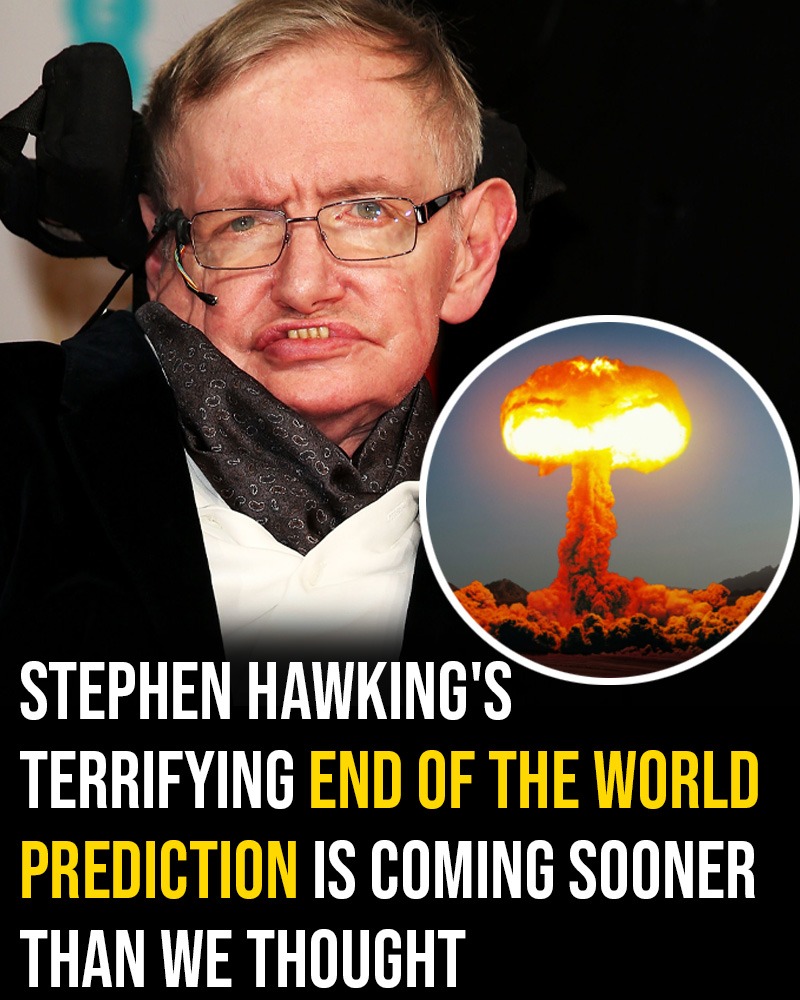
Renowned theoretical physicist Stephen Hawking was widely known for speaking openly about the long-term future of humanity. Among his most widely discussed remarks were warnings about potential risks facing the planet if current global trends continue.
Although Hawking passed away in 2018, his insights on science, technology, and humanity’s trajectory continue to influence conversations about space exploration, climate risk, and the future of civilization.
Concerns About Population Growth and Energy Use
Throughout his career in Theoretical Physics and Cosmology, Hawking often highlighted global challenges that could affect the long-term survival of human civilization.
One major concern he discussed involved rapid population growth combined with increasing global energy consumption. According to remarks he delivered during the Tencent WE Summit 2017, these trends could place enormous pressure on the planet over time.
Hawking explained that if exponential growth continued for centuries, the Earth’s population and energy demands could eventually reach unsustainable levels. In that scenario, the strain on global resources and the environment could lead to severe consequences for the planet.
A Long-Term Scenario for Earth
During that same presentation, Hawking described a theoretical projection suggesting that within about 600 years, Earth could become extremely difficult for humans to inhabit if global consumption patterns continued unchecked.
In his example, the combination of massive population density and rising energy usage could potentially transform the planet into what he described as a “giant ball of fire.” His comments were meant to illustrate the importance of addressing long-term sustainability challenges.
Other Risks Hawking Identified
Beyond environmental pressures, Hawking also spoke about several other potential risks facing humanity.
Among the global threats he frequently mentioned were:
- The possibility of nuclear conflict
- Future global pandemics
- Rapid technological advances in Artificial Intelligence
He argued that while the probability of any single catastrophic event in a given year might be relatively small, the cumulative risk could grow over long time periods.
Climate and Long-Term Planetary Risk
In earlier interviews discussing Climate Change, Hawking noted that even low-probability disasters could become more likely when considered across centuries or millennia.
His broader message focused on encouraging scientific research, responsible technological development, and long-term planning for humanity’s future — including the possibility of expanding beyond Earth through space exploration.
A Perspective, Not a Prediction
It is important to note that Hawking presented these ideas as theoretical scenarios and warnings, rather than guaranteed outcomes. His goal was to highlight potential risks and encourage global cooperation to address them.
Today, his remarks continue to inspire debate among scientists, policymakers, and technology leaders about how humanity can manage global challenges while safeguarding the planet for future generations.