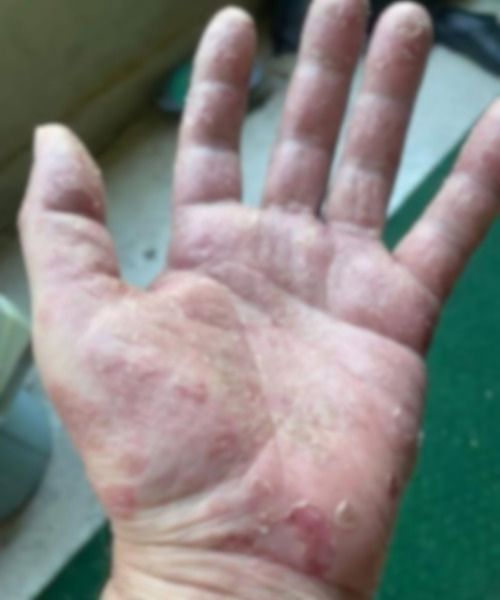
Common Conditions Behind Hand Irritation
Not all “dry skin” is the same. In many cases, it may be linked to specific skin conditions that require a different approach.
One of the most common is Hand Eczema, which causes redness, itching, and inflammation. It often flares up due to stress, frequent washing, or exposure to irritants.
Another possibility is Contact Dermatitis. This condition develops when your skin reacts to substances like detergents, metals, or cleaning products. Interestingly, it can appear suddenly—even after years of using the same items without issues.
Psoriasis is more complex. It leads to thick, scaly patches due to rapid skin cell buildup. When it affects the hands, it can cause discomfort and visible cracking.
In some cases, irritation may be caused by a Fungal Infection, which can spread slowly and may not improve with standard moisturizers.
The Hidden Impact of Overwashing
In recent years, frequent handwashing and sanitizer use have become part of daily life. While hygiene is important, overdoing it can strip away natural oils that keep your skin healthy. Without these oils, the skin becomes more vulnerable to irritation and damage, creating a cycle that’s hard to break.
Warning Signs You Shouldn’t Ignore
There are times when hand irritation goes beyond a simple skin issue. Cracks that bleed, a persistent burning sensation, or spreading redness may signal a more serious problem or even infection. When these signs appear, it’s important to take them seriously and seek appropriate care early.
How to Support Healing and Protection
Caring for your hands properly can make a significant difference. Thicker, fragrance-free creams or ointments tend to be more effective than lightweight lotions. Ingredients like ceramides and glycerin help restore the skin barrier and retain moisture.
Simple habits can also protect your skin: wearing gloves while cleaning, choosing gentle soaps, and avoiding unnecessary exposure to harsh chemicals. Consistency is key—small changes in your routine can lead to noticeable improvements over time.
Listen to What Your Skin Is Saying
Your hands often reflect what’s happening inside your body, from stress levels to environmental exposure. Paying attention to early signs can help you address problems before they worsen.
Have you noticed changes in your skin recently? Share your experience or tips—your insight might help someone else take better care of their health.