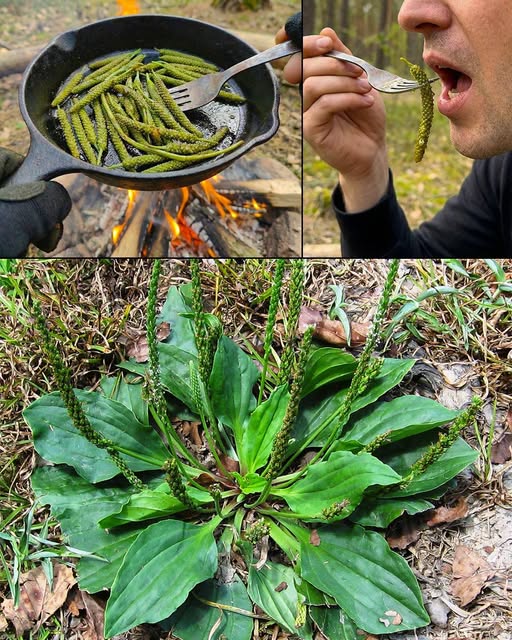
How to Cook Plantain Shoots
Quick Sauté:
Rinse shoots thoroughly to remove dirt.
Chop into bite-sized pieces.
Sauté briefly in a pan with oil or butter.
Season with salt, pepper, or garlic.
Result: tender, mild greens that pair well with eggs, grains, or as a side vegetable.
Blanching for Storage:
Boil shoots for a short period, then cool quickly.
Drain and freeze in portions.
Perfect for soups, stews, or later sautéing without losing texture.
Everyday Uses:
Mix into omelets or scrambled eggs.
Add to rice, quinoa, or grain bowls.
Stir into vegetable soups or stews.
Pickle very young shoots for a tangy, versatile garnish.
Traditional Uses Beyond the Kitchen
Historically, plantain leaves were used as a simple poultice for minor skin irritations. While interesting, these traditional applications should never replace professional medical care for serious conditions.
Foraging Safely
If you’re gathering wild plantain:
Identify correctly—oval leaves and parallel veins are key.
Harvest cleanly—avoid roadsides, treated lawns, or contaminated soil.
Start small—some people may have digestive sensitivity or allergies.
Seek advice if pregnant, taking medications, or managing health conditions.
Why Plantain Matters
Plantago major reminds us that valuable foods are often growing right under our noses. When harvested young and prepared simply, its flowering shoots add fiber, nutrients, and a mild, versatile flavor to your meals.
Incorporating these overlooked greens can expand your diet, connect you with local nature, and turn everyday spaces into sources of fresh, edible goodness.
🌱 Next time you see this humble backyard plant, think twice—your next healthy meal might be growing right outside your door! Have you tried wild plantain yet? Share your favorite recipes in the comments below.