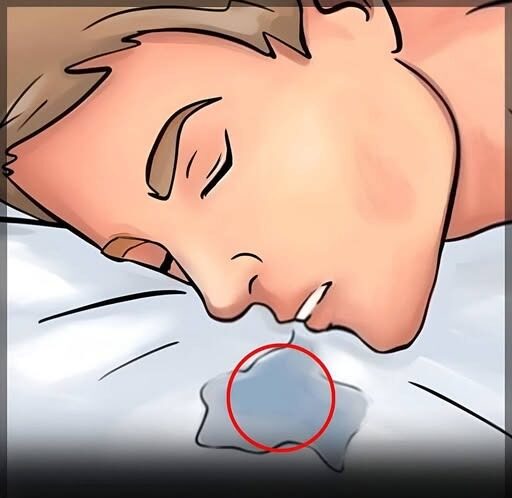
- Infections or Dental Issues
Oral infections, cavities, or gum problems can increase saliva production. Pain, swelling, or bleeding while brushing are red flags—see a doctor or dentist promptly. - GERD (Acid Reflux)
Acid reflux can make swallowing difficult, causing excess saliva. Frequent heartburn combined with drooling is a signal to speak with your healthcare provider. - Neurological Conditions
Conditions like stroke, Parkinson’s, Alzheimer’s, Bell’s Palsy, ALS, and even vitamin B12 deficiency can cause drooling due to weakened swallowing control. - Teeth Grinding
Grinding your teeth at night, or using a mandibular device, can increase saliva. Continue using your night guard and consult your doctor if drooling worsens. - Pregnancy
Excess saliva during pregnancy (ptyalism gravidarum) is common. Hormonal changes, stress, and sleep disruptions may also contribute.
6 Ways to Reduce Nighttime Drooling
- Adjust Your Sleep Position
Sleeping on your back can reduce drooling. Side or stomach sleepers may need time to adjust, but it can make a big difference. - Home Remedies
Stay hydrated and maintain healthy saliva balance. Some try biting a lemon wedge, though citrus can affect enamel—use caution.
- Mandibular Devices
Oral appliances like mouthguards can help keep your mouth closed and reduce drooling. - CPAP for Sleep Apnea
If sleep apnea is the cause, a CPAP machine can improve breathing, sleep quality, and reduce drooling. - Botox Injections
In more severe cases, Botox can temporarily reduce saliva production. Only a licensed professional should administer this treatment. - Surgery (Last Resort)
For extreme cases linked to neurological conditions, removing salivary glands may be considered—but only after other options fail.
When to See a Doctor
If drooling is frequent, sudden, or accompanied by symptoms like difficulty swallowing, facial weakness, speech changes, heartburn, or oral pain, consult a healthcare professional. They can evaluate the cause, run tests, and create a personalized treatment plan.
The Bottom Line
Drooling while sleeping is usually harmless, but if it’s excessive, sudden, or paired with other health concerns, it’s worth getting checked. Even mild cases can affect sleep quality, which is vital for overall health.
Ever woken up with a soaked pillow? Share your experience or tips for managing nighttime drooling below!