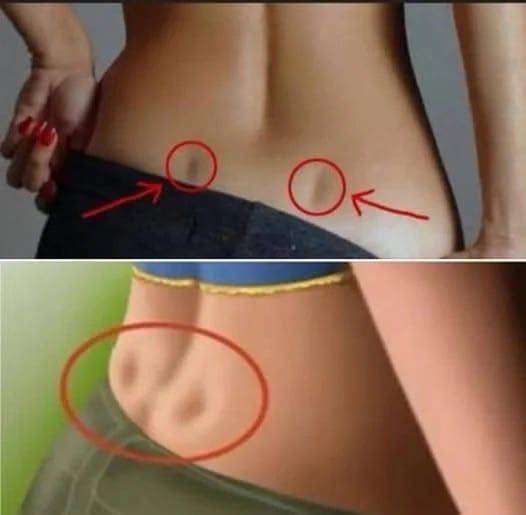
Lower back dimples—often called Venus dimples or Apollo dimples—tend to attract attention because of their distinct shape. They appear as small indentations above the buttocks and are sometimes highlighted in fitness and beauty discussions.
But despite the popularity surrounding them, they are not a special marker of health, fitness, or attractiveness. They are simply a natural variation in human anatomy.
What Causes Lower Back Dimples?
These dimples form where the skin connects more tightly to the underlying pelvic structure. In people who have them, the skin is slightly tethered to a specific point on the pelvis, creating a visible indentation.
Others may have the same underlying anatomy but without visible dimples. That difference is completely normal and does not indicate anything is “missing” or “better.”
Why Some People Have Them and Others Don’t
Several natural factors influence whether these dimples appear, including:
- Bone structure: The shape of the pelvis plays a key role
- Ligament attachment: Determines how the skin is anchored
- Body fat distribution: Affects how visible the indentation is
These traits are largely genetic, meaning they are not something a person can reliably create or control.
Common Misconceptions
Over time, lower back dimples have been linked to beauty trends and fitness ideals. Some people assume they indicate:
- Higher fitness levels
- Better health
Continue reading on the next page…