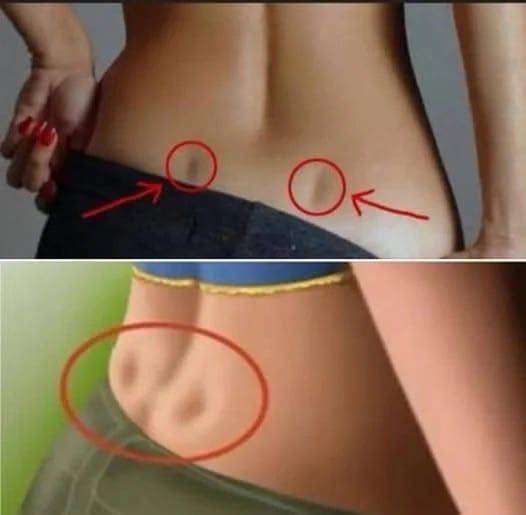
- A more “attractive” body
In reality, none of these assumptions are medically accurate. Their presence—or absence—does not reflect strength, wellness, or lifestyle.
Can They Become More Visible?
While the structure behind these dimples doesn’t change, their appearance can vary slightly.
Lower body fat levels may make them more noticeable, and muscle development in the lower back and glutes can enhance overall definition. However, even with training, not everyone will develop visible dimples.
That’s completely normal.
Exercise and Its Real Benefits
Although exercise won’t “create” lower back dimples, it plays an important role in overall health.
Strengthening the posterior chain (the muscles along the back of the body) can improve:
- Posture
- Core stability
- Spinal support
- Injury prevention
Exercises like deadlifts, glute bridges, and back extensions help build functional strength that benefits daily life—regardless of appearance.
Moving Away From Appearance-Based Goals
It’s easy for small physical traits to become beauty standards, especially through social media. But focusing on features like lower back dimples can shift attention away from what truly matters.
Health and fitness are about how the body performs, not how specific details look.
Embracing Natural Variation
Every human body is different. Features like lower back dimples highlight that diversity rather than define a standard of beauty.
Having them doesn’t make someone more fit, and not having them doesn’t mean anything is lacking. It’s simply biology at work.
Final Thoughts
Lower back dimples are a harmless, natural anatomical variation shaped by genetics and structure. They do not determine health, strength, or value.
A balanced approach to fitness focuses on mobility, strength, and long-term well-being—not isolated physical traits.
When we shift attention from appearance to function, we build a healthier and more realistic understanding of the human body.
If you found this helpful, share it with others and join the conversation—because understanding your body is the first step toward appreciating it.